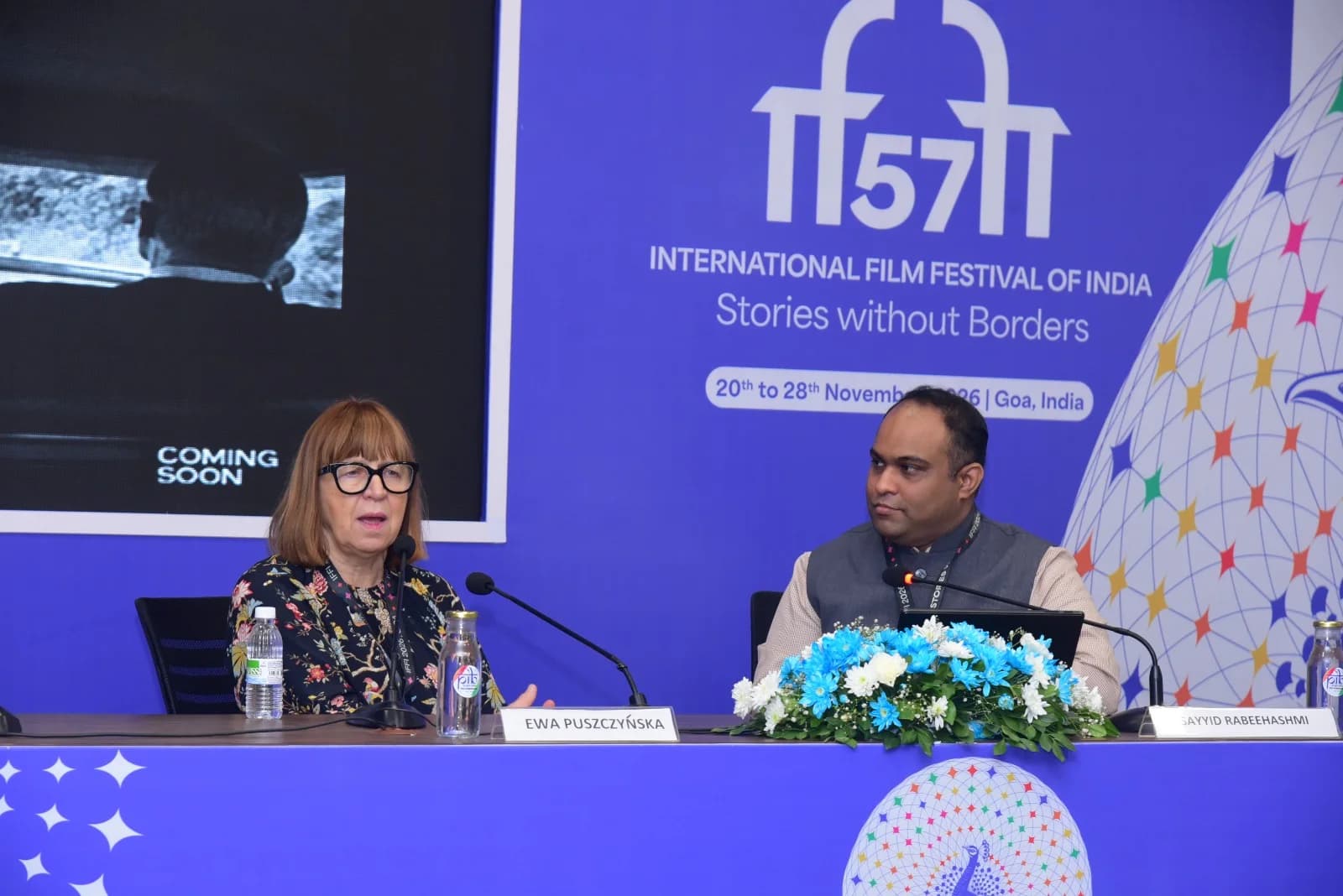
Polish producer Ewa Puszczyńska, whose film Fatherland opened the 57th International Film Festival of India (IFFI), told a press conference in Goa on 21 November 2026 that cinema may not transform the world overnight but can open minds and get people talking to one another, according to a release from the Press Information Bureau (PIB).
She also said she would like to explore a film on a shared chapter of Indian and Polish history: the Polish children who found refuge in India during the Second World War. She said she had discussed the subject with IFFI Festival Director Ashutosh Gowariker, who, according to PIB, has already written a script on it, and hoped the conversation could continue.
What did Puszczyńska say about cinema's role?
Puszczyńska said films should speak to audiences and show them "other sides of life, other sides of the world". Pointing to divisions in today's societies, she argued that no single agenda or narrative can claim to be the only correct one. "Talk to each other, let's find the common ground," she said.
What is Fatherland about?
Fatherland is set in a divided Europe in 1949 and follows the German writer Thomas Mann and his family. Puszczyńska described it as a layered film about the East–West divide, identity and belonging in an age of migration, the bond between culture and society, and the pressures faced by children of famous artists. "Where is your fatherland? Is it the country you live in, or is it the language you speak?" she asked, summing up one of its central questions.
The festival opened on 20 November with the film, directed by Paweł Pawlikowski.
Why black and white?
The film was shot in black and white and in a 4:3 frame, the same look Puszczyńska used in her earlier collaborations with Pawlikowski, Ida and Cold War. The aim, she said, was to make the film look authentic to its period, adding that Fatherland "may be treated as the third film in the trilogy".
Where was it made?
- The film is a co-production between Poland, Germany, Italy and France.
- Although the story is set in Germany, nearly 95 per cent of it was shot in Poland, with largely Polish creative and technical crews.
- Polish locations, including run-down streets, buildings and small towns, were used to recreate post-war Germany.
Why it matters
The opening film's producer floating an India–Poland story gives the festival a possible co-production lead beyond its screenings. It comes in the same week that India and Spain began talks at IFFI on updating their film co-production pact.
What happens next?
No project has been announced. Puszczyńska only expressed hope that talks with Gowariker could continue and that the possibility of taking the idea forward could be explored. The press conference was moderated by Sayyid Rabeehashmi. IFFI runs in Goa until 28 November 2026.