On 27 November 2026, the Ministry of Road Transport and Highways (MoRTH) announced that drivers who deliberately hide or tamper with their number plates, or skip fitting a FASTag, to avoid paying at barrier-free Multi-Lane Free Flow (MLFF) toll plazas will face a penalty of five times the toll, on top of the toll itself, according to the public broadcaster's news service. MapMyTimes reported the announcement here. This explainer sets out how barrier-free tolling works, how the new penalty differs from the existing rules on unpaid tolls, and what is still unclear.
What is the new MLFF penalty?
The new penalty is a charge of five times the applicable user fee for anyone who deliberately avoids paying at an MLFF plaza by masking, tampering with or concealing a number plate, or by not affixing a FASTag. It comes in addition to the regular toll, so a driver caught this way would in effect pay six times the normal amount. According to the ministry, as reported by News On AIR, offending vehicles will be identified through a technology-driven process that includes Automatic Number Plate Recognition (ANPR) cameras. Reports of the ministry's statement, including one by Civilsdaily, say the penalty applies only where intent to evade the user fee is established.
Why is it in the news?
It is in the news because barrier-free plazas can collect money only if they can identify the vehicle, and a hidden plate combined with a missing FASTag defeats that. The ministry said the penalty is proposed to apply at every location where MLFF operates and at any new location where it is introduced later. Road users have been advised to keep number plates clearly visible at all times and to pay the user fee when it is due.
What is MLFF tolling, and where does it operate?
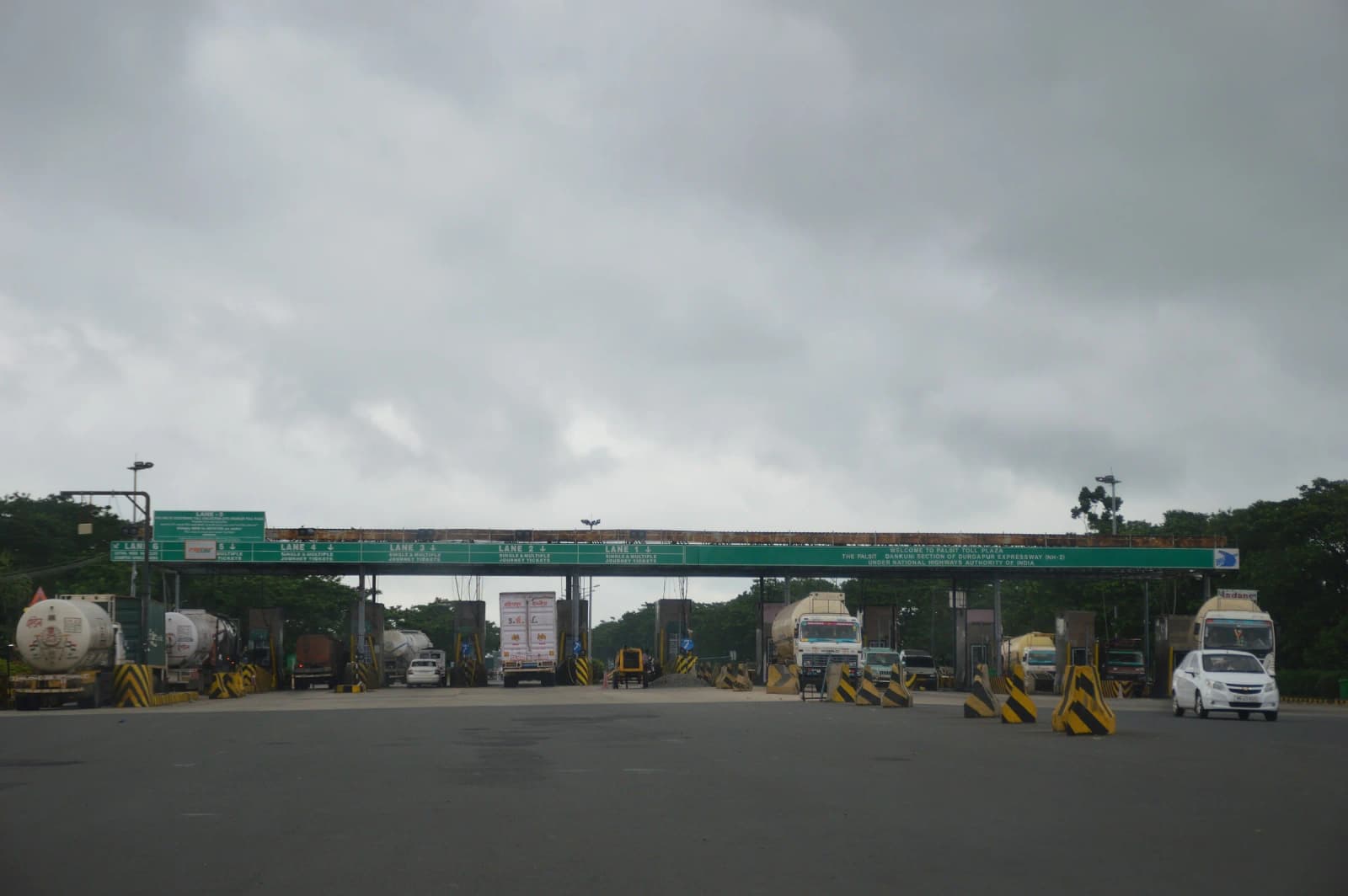
MLFF is a tolling system with no physical barriers, where vehicles pass under overhead equipment without stopping and the toll is charged automatically using FASTag (RFID) readers and ANPR cameras. India's first such plaza opened at Choryasi (also spelt Chorayasi) on National Highway 48 in Gujarat, on the Surat–Bharuch section, in early May 2026. News On AIR reported on 2 May 2026 that about 41,500 vehicles crossed the plaza on its first day.
The network has grown since. A report by Autocar Professional on 17 August 2026, citing a Crisil Intelligence report, said six MLFF plazas were functional as of 1 August 2026: Choryasi in Gujarat, Mundka in Delhi, and Daulatpura, Gharaunda, Manoharpura and Shahjahanpur in Rajasthan and Haryana. The same report said 17 plazas were proposed in the initial phase, and that bids had been invited for 104 more, which would take the total to 121. It said the operational plazas had processed over 1.1 crore transactions and that about 10% of vehicles had triggered payment failures as of July 2026, with roughly 10.5 lakh e-notices issued.
How is this different from missing a toll because of low balance?
A missed toll due to low FASTag balance or a technical glitch is handled under a separate framework of e-notices, while the fivefold penalty targets deliberate evasion. Under rules that took effect on 17 March 2026, as reported by DeshGujarat, an "unpaid user fee" arises when a vehicle's passage is recorded electronically but the toll is not received. The owner gets an electronic notice by SMS, email or app with the location, date and amount. Paying within 72 hours means only the original toll applies; otherwise the charge doubles. Owners can contest a notice within 72 hours, and the tolling authority must decide within five days or the claim lapses. If a notice is neither paid nor contested within 15 days, the dues are recorded on the VAHAN vehicle registry and vehicle-related services can be restricted.
In short: forgetting to top up can cost double the toll if you do not pay within 72 hours, while concealing your identity to dodge the toll can cost six times the toll in total.
How does it affect you?
For most drivers who keep a working FASTag and a clean, readable number plate, nothing changes. The penalty is aimed at people who make their vehicle unidentifiable. In practical terms, the ministry's advice means checking that the FASTag is fixed and active, that the account has balance, and that nothing such as mud, a bike rack, stickers or a tow bar covers either plate. Drivers who receive an e-notice for a genuine miss can pay or contest it within the 72-hour window described above.
What is established, and what is still unclear?
Established: the ministry has announced a fivefold penalty on top of the toll for deliberate evasion at MLFF plazas, tied to masked or tampered plates or a missing FASTag, with identification through ANPR and related technology.
Unclear: the reports reviewed by MapMyTimes did not name the rule or notification that will carry the penalty, give a start date, or set out how "intent" will be established and challenged. One open concern, raised in the Civilsdaily analysis, is that a copied number plate could send a penalty notice to the genuine owner of that registration number, which makes a clear appeal route important.
What happens next?
The next step to watch is a formal notification setting out the legal basis, start date and grievance process for the penalty. As more MLFF plazas are added under the bids reported in August, the rule is set to cover a growing share of highway traffic, which is why drivers will want those details settled before enforcement begins.
Photo source · Biswarup Ganguly, CC BY 3.0