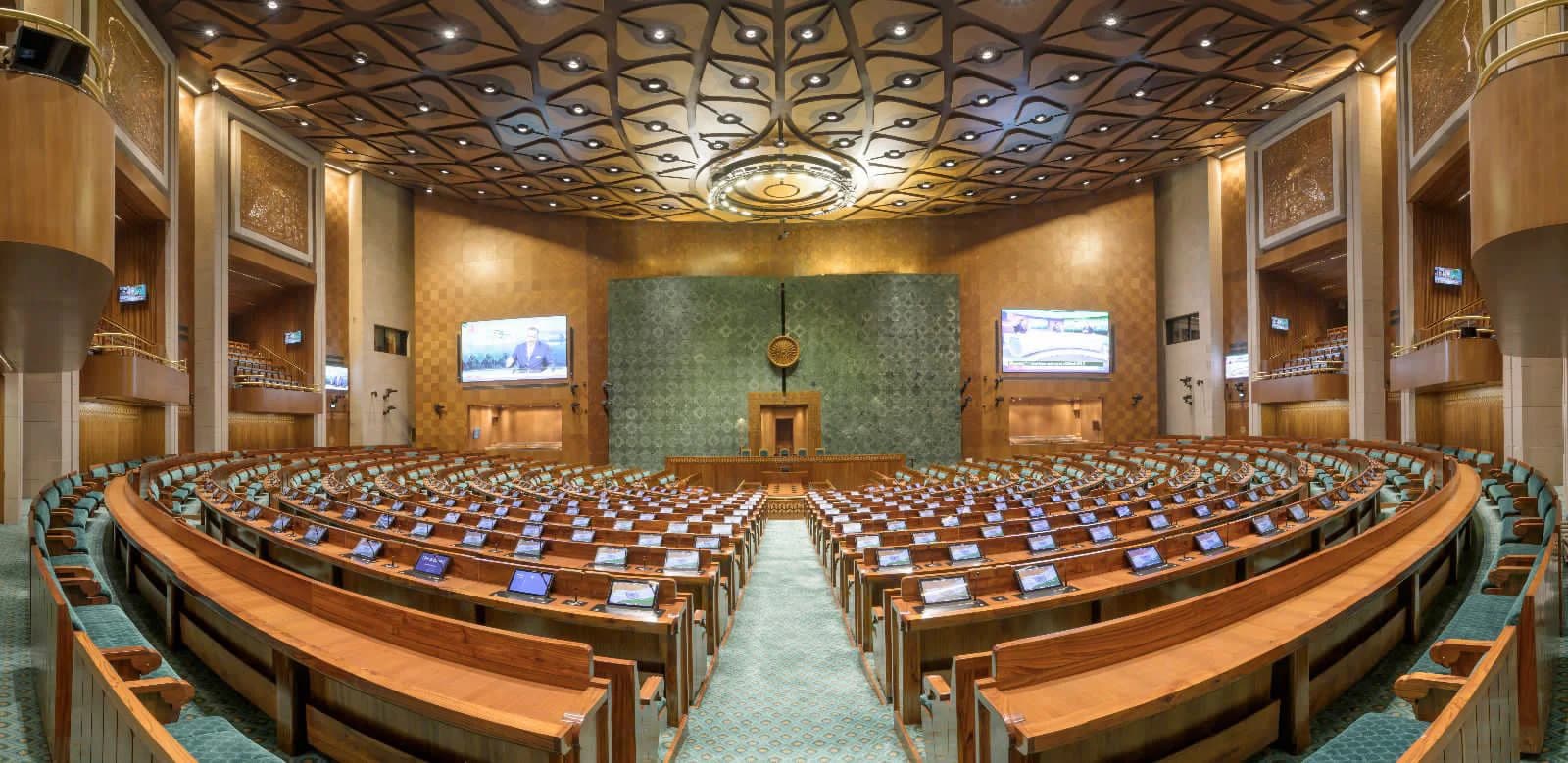
The Union government will ask Parliament to approve a revised package of delimitation bills at a special sitting that opens in the Lok Sabha on Monday, 30 November 2026, in New Delhi. According to All India Radio's report of 28 November 2026, the bills would raise the number of seats in every state by 50 per cent, take the Lok Sabha from 543 to 816 seats, and bring in 33 per cent reservation for women in the 2029 general election. President Droupadi Murmu has recommended the Delimitation (Second) Bill, 2026 for consideration, a day after the Union Cabinet approved the package on 27 November. This explainer sets out what the bills do, why they are back, and what changes for voters.
What is the delimitation package?
The package is a set of three bills that together would enlarge Parliament and state assemblies, redraw constituencies and give effect to the women's quota. All India Radio listed them as the Constitution (One Hundred and Thirty-Second Amendment) Bill, 2026; the Delimitation (Second) Bill, 2026; and the Union Territories Laws (Amendment) Second Bill, 2026.
- The Constitution amendment changes the constitutional rules on how many seats the Lok Sabha has and how they are shared among states.
- The Delimitation (Second) Bill sets up the process for redrawing seats and, according to the broadcaster, is meant to give effect to reserved seats for women in the Lok Sabha and in state and Union Territory assemblies.
- The Union Territories bill, to be moved by Union Home Minister Amit Shah, amends the Government of Union Territories Act, 1963, the Government of National Capital Territory of Delhi Act, 1991 and the Jammu and Kashmir Reorganisation Act, 2019, so that the same changes reach Puducherry, Delhi and Jammu and Kashmir.
Union Law and Justice Minister Arjun Ram Meghwal is to move the first two bills. He said every state and Union Territory would see its parliamentary representation grow.
MapMyTimes could not access the text of the revised Delimitation (Second) Bill. The earlier version tabled in April, the Delimitation Bill, 2026 (Bill No. 108 of 2026), provided for a Delimitation Commission chaired by a sitting or retired Supreme Court judge, with the Chief Election Commissioner or an Election Commissioner nominated by them, and the State Election Commissioner of the state concerned. That version also required women's reserved seats, including those for Scheduled Caste and Scheduled Tribe women, to rotate between constituencies.
Why is it in the news?
It is in the news because the government is making a second attempt after its first constitutional amendment on delimitation was defeated in April. On 17 April 2026, the Lok Sabha rejected consideration of the Constitution (131st Amendment) Bill: according to Scroll, 298 members voted for it and 230 against, short of the 352 votes needed for a two-thirds majority of the 528 members present. That bill proposed 815 seats and would have based delimitation on the 2011 Census instead of the 1971 figures. The Federal reported that a united Opposition objected to linking delimitation to the next Census.
The revised plan tries to answer that objection. Instead of shifting seats between states on population, it gives every state the same 50 per cent rise. The Federal reported that it also freezes the existing state-wise seat allocation for 25 years, until 2051. Onmanorama reported that the proportion based on the 1971 Census would be kept for another 25 years.
That change won over the Dravida Munnetra Kazhagam (DMK). After a meeting in Chennai on 28 November chaired by party president and Tamil Nadu Chief Minister M.K. Stalin, DMK MP A. Raja announced the party's support. He said its demands had been built into the bill. According to Onmanorama, Tamil Nadu's share of Lok Sabha seats would edge up from 7.18 per cent to 7.21 per cent under the uniform rise. As MapMyTimes reported, the INDIA bloc met the same day at Congress president Mallikarjun Kharge's residence and set three conditions: keep the Lok Sabha at its present size, fit the women's quota within existing seats, and keep the present state-wise allocation for 25 years.
Can the government get the numbers?
The vote remains uncertain, because a constitutional amendment needs a two-thirds majority in both Houses. The Federal estimated that the National Democratic Alliance (NDA) has about 319 votes in the Lok Sabha and would approach 350 if the DMK's 22 MPs and the NCP (Sharad Pawar) faction's eight MPs vote for it. It put the target at about 358, though abstentions could lower it. These are newsroom estimates, not official counts.
How does it affect you?
For voters, the most visible effects would be more MPs, redrawn constituency boundaries and, from 2029, about one in three seats reserved for women candidates.
- Smaller constituencies: With 816 seats instead of 543, each MP would on average represent fewer people. The boundaries of your Lok Sabha and assembly seat could change.
- Women's reservation: The government says one-third of seats would be reserved for women in the 2029 Lok Sabha election. Under the April draft, these reserved seats rotate, so a seat reserved in one election may be open in the next.
- State balance: Because every state rises by the same percentage, the regional balance in the Lok Sabha would stay close to today's. That was the main concern of southern states.
- Still open: BSP chief Mayawati has backed the women's quota but repeated her demand for a separate sub-quota for SC and ST women. The bills as described do not create one.
What happens next?
The Lok Sabha sits for four days, from Monday, 30 November, to Thursday, 3 December, and the Rajya Sabha holds a two-day sitting from 2 December, according to All India Radio. If both Houses pass the constitutional amendment by the required majority, a Delimitation Commission would then redraw seats before 2029. MapMyTimes will update this explainer once the bill text is tabled and the votes are counted.
Photo source · Ministry of Parliamentary Affairs, GODL-India