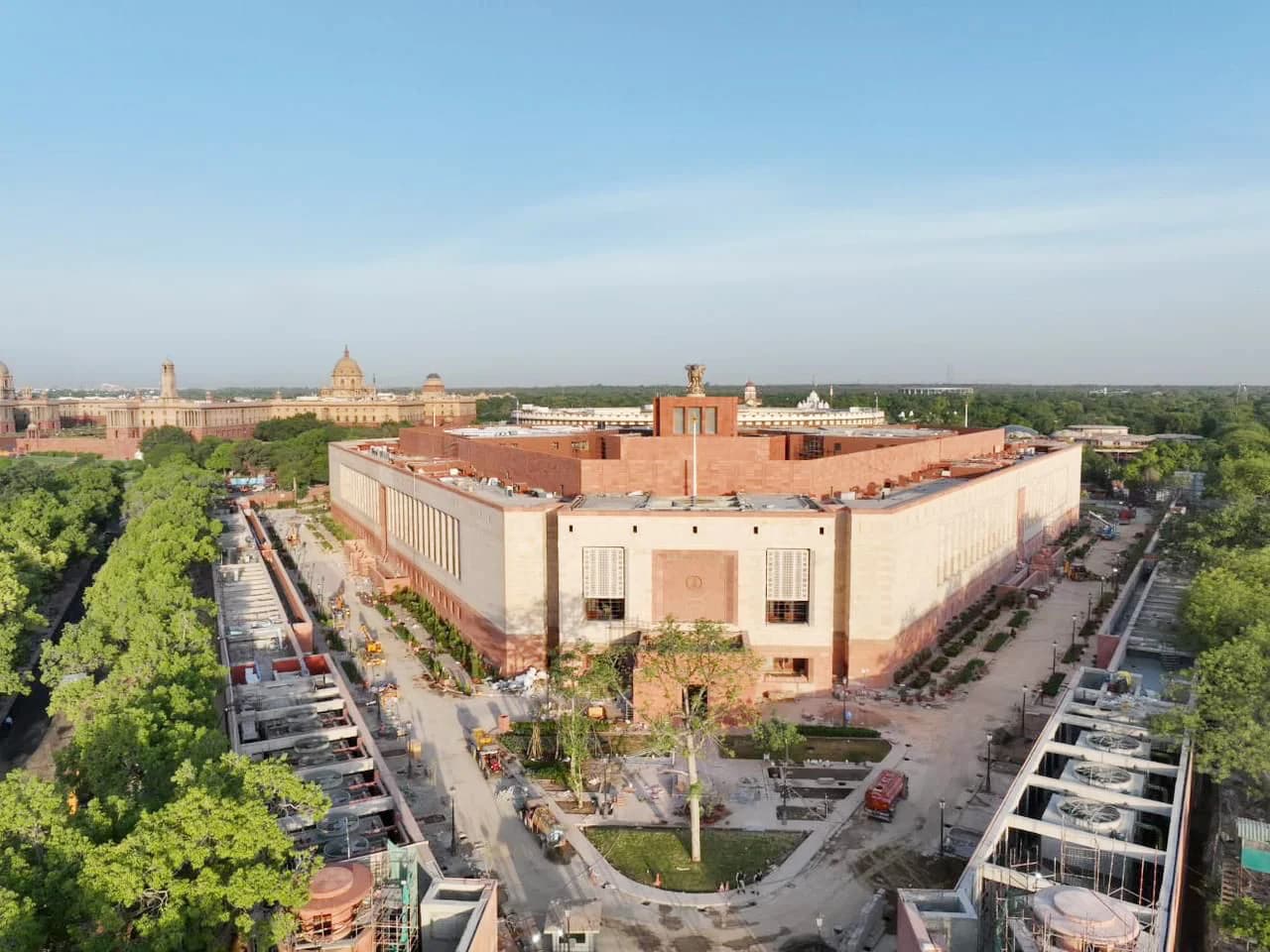
Parliament will reconvene for a short sitting from Monday, 30 November 2026, and the question dominating political debate in New Delhi is whether the Union government will use it to revive its plan to redraw India's parliamentary map. Union Parliamentary Affairs Minister Kiren Rijiju announced the sitting on 26 November 2026 without naming the bills to be taken up, but delimitation is widely expected to be on the agenda. MapMyTimes reported the announcement on 26 November. This explainer sets out what delimitation is, why it is back in the news, and what is confirmed and what is not.
What is delimitation?
Delimitation is the process of fixing how many Lok Sabha and State Assembly seats each state gets and redrawing the boundaries of constituencies within each state. According to an analysis by PRS Legislative Research, the Constitution requires Lok Sabha seats to be shared among states in proportion to their population, requires constituencies within a state to have roughly the same population, and requires seats to be redrawn after each census.
In practice, that rule has been suspended for half a century. PRS notes that the 42nd Constitutional Amendment of 1976 froze each state's share of Lok Sabha seats on the basis of the 1971 Census, initially until the first census after 2000. The 84th Amendment of 2001 extended the freeze until the publication of the first census after 2026, a step PRS describes as meant to encourage states to pursue population stabilisation. The last Delimitation Commission was set up in 2002 and its orders were finalised in 2008.
Why is it in the news?
It is in the news because the government has called Parliament back at short notice, and delimitation is the main unfinished item from an earlier, failed attempt. In a post on X on 26 November, Mr Rijiju said the government had asked the Lok Sabha Speaker and the Rajya Sabha Chairman to reconvene the Lok Sabha on 30 November and the Rajya Sabha on Wednesday, 2 December, "to transact essential Government Business", with both Houses likely to conclude on 3 December, news agency ANI reported. The Lok Sabha Secretariat said the sitting is the second part of the Eighth Session of the 18th Lok Sabha. Parliament last met in the Monsoon Session, which was adjourned sine die on 13 August 2026.
The background is April's special sitting. On 16 April 2026 the government introduced three linked bills: the Constitution (131st Amendment) Bill, 2026, the Delimitation Bill, 2026 and the Union Territories Laws (Amendment) Bill, 2026. According to PRS Legislative Research, the amendment would have raised the Lok Sabha's maximum strength from 550 to 850 members (up to 815 from states and 35 from Union Territories), let Parliament decide by ordinary law which census to use, and enabled the next delimitation to be based on the 2011 Census. On 17 April, the amendment received 298 votes in favour and 230 against, short of the special majority a constitutional amendment needs, and the government withdrew the other two bills.
Why does women's reservation depend on it?
Women's reservation depends on delimitation because the law that created it says so. The 106th Constitutional Amendment of 2023 reserves one-third of seats in the Lok Sabha and State Assemblies for women, but it takes effect only after a delimitation based on the first census after the 2023 Act. The Census 2027 reference date is 1 March 2027, with population enumeration scheduled for February 2027, according to a Press Information Bureau document dated 25 April 2026. PRS has noted that a delimitation based on that census is unlikely to be completed before the 2029 Lok Sabha election, which would mean no women's quota in 2029 unless the rules are changed.
How does it affect you?
It affects you because delimitation decides how many MPs your state sends to Parliament, and how big and where your own constituency is. The sharpest dispute is between states. PRS calculated that if the Lok Sabha kept its current size and seats were reallocated on 2011 Census figures, Tamil Nadu would fall from 39 seats to 32 and Kerala from 20 to 15, while Uttar Pradesh would rise from 80 to 89, Bihar from 40 to 46 and Rajasthan from 25 to 30. Opposition parties argued in April that population-based reallocation would penalise southern states and others that slowed population growth.
Even if each state's share is protected, redrawing boundaries within states could change which constituency your neighbourhood falls in, and a larger House would mean more MPs, each representing fewer people.
What is the revised plan, and what is still uncertain?
Very little about the revised plan is officially confirmed. The government has not published a revised bill, and the official notices for the sitting do not mention delimitation. Media reports citing unnamed sources say a revised Delimitation Bill could give every state a uniform 50 per cent increase in Lok Sabha seats, keep the 1971-based inter-state shares frozen for another 25 years, and use the 2011 Census only to redraw constituencies within states. These details should be treated as unconfirmed until the bill is circulated.
What is established: the sitting dates, April's failed vote, the existing constitutional freeze and the women's reservation link. What is uncertain: the exact text of any new bill, whether it will be listed for 30 November, and whether the government has the numbers. A constitutional amendment must clear both Houses by a special majority; in April, with 528 members voting in the Lok Sabha, the government needed 352.
What happens next?
The next step is the Lok Sabha's sitting on 30 November, where the government's list of business will show whether a delimitation bill is coming. If an amendment passes the Lok Sabha, it would go to the Rajya Sabha from 2 December. Under the April Delimitation Bill, the Union government would then set up a Delimitation Commission headed by a serving or retired Supreme Court judge, with the Chief Election Commissioner or a nominated Election Commissioner and the relevant State Election Commissioner as members. Whether the revised version keeps that design is not yet known.
Photo source · Ministry of Parliamentary Affairs/PIB, GODL-India