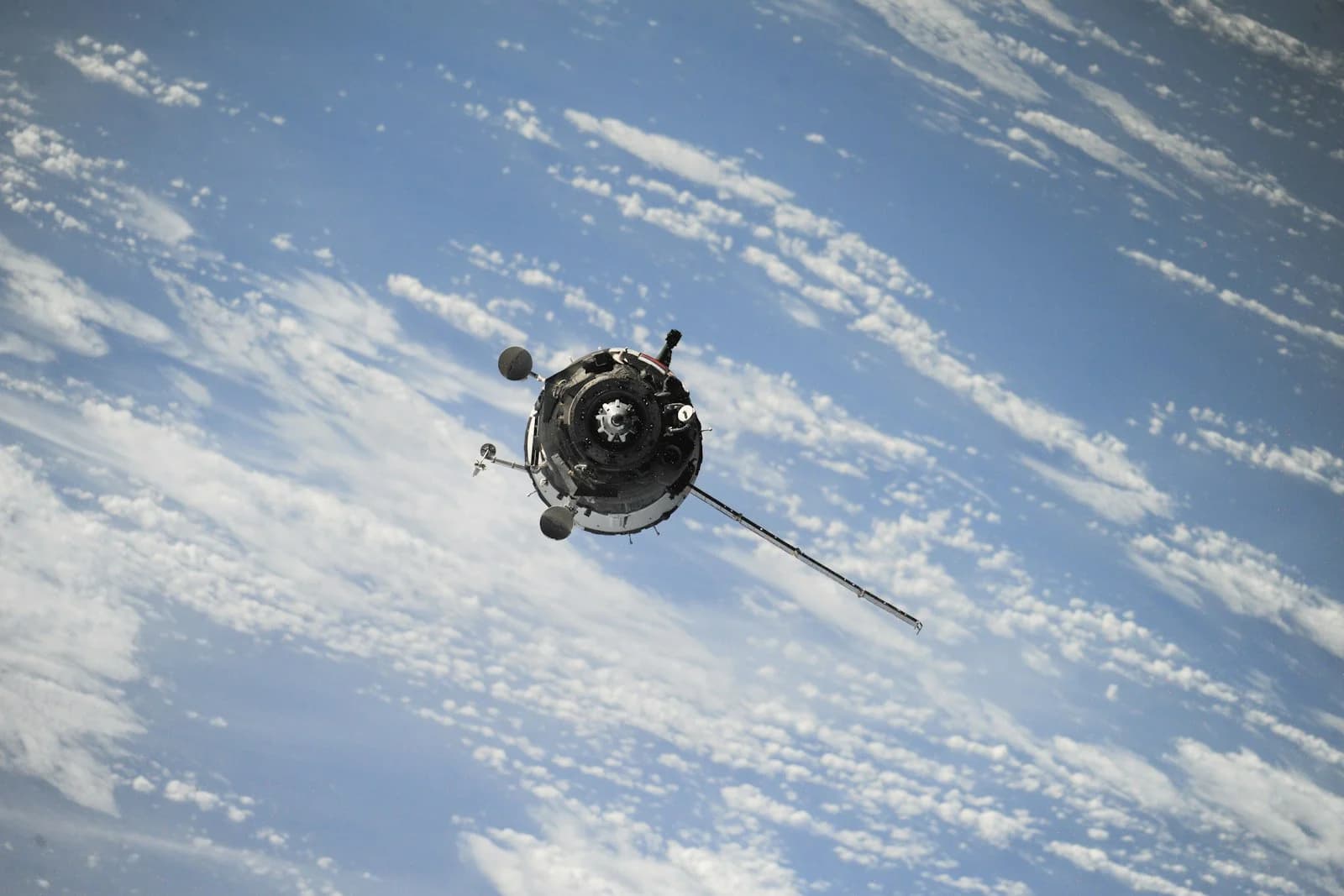
Arianespace is scheduled to launch 36 Amazon Leo satellites on an Ariane 64 rocket from Kourou, French Guiana, on 23 November 2026, with Amazon giving a target time of 11:09 UTC (4:39 pm IST). The flight comes eight days after another rocket carrying 40 of the satellites was lost, and has put fresh attention on Amazon's plan to sell internet from space, including in India. Here is what the network is, where it stands and what is still unclear. (Our launch preview has the mission details.)
What is Amazon Leo?
Amazon Leo is Amazon's satellite broadband network in low Earth orbit, the project formerly known as Project Kuiper, which the company renamed on 13 November 2025. The idea is to use a large fleet of satellites, rather than cables or mobile towers, to deliver internet to homes, businesses and governments, including in places that ground networks do not reach well. According to Amazon, new satellites are released at about 465 km and then raised by its operations team to about 630 km. Trade coverage of the FCC's decisions frames it as a rival to SpaceX's Starlink.
The planned size is large. Light Reading reports that the US Federal Communications Commission (FCC) has authorised 3,236 satellites for the first generation of the system; some reports give a slightly lower figure after a later modification. Amazon says its launch manifest includes more than 100 missions.
Why is it in the news now?
It is in the news because of two launches a week apart. On 15 November 2026, a United Launch Alliance Vulcan rocket carrying 40 Amazon Leo satellites on the LV-01 mission suffered an anomaly and the payload was lost, according to Amazon's mission updates page. Amazon said there is risk with any launch, "especially true for inaugural missions like LV-01", and that it believes ULA will learn from the mission.
The next flight, LE-04, is the 10th Ariane 6 flight and the fourth in the four-booster Ariane 64 version, Arianespace said in its 14 October announcement. If it succeeds, Arianespace will have put 136 Amazon Leo satellites in orbit. The company said its agreement with Amazon covers 24 launches, and noted that Amazon announced six additional Ariane 64 launches in September 2026.
How many satellites are already up?
Amazon says it has launched "nearly 400 satellites" across 14 missions since its first full-scale launch in April 2025, and calls Leo the third-largest constellation in orbit. Its own mission list for those 14 flights adds up to 396 satellites. Amazon does not say on that page how many of them are currently working, so the size of the operational fleet is not publicly confirmed.
Is Amazon behind schedule?
Yes, against its original licence terms, though the regulator has given it room. Under its FCC authorisation, Amazon was expected to have half of the constellation deployed by 30 July 2026. Light Reading reported that an FCC order dated 5 June 2026 gave relief on that interim milestone, moving it to 30 July 2028, while the deadline for the full constellation stays at 30 July 2029. SDxCentral, reporting on 7 July, described the outcome differently: the FCC declined Amazon's February request for a straight two-year extension and instead granted a conditional waiver, under which satellites launched after 30 July 2026 lose spectrum priority until Amazon has half its constellation in orbit, or until March 2028 at the latest. The precise terms therefore depend on which reading of the order is correct.
Can anyone use Amazon Leo yet?
Only selected businesses, as far as Amazon has said publicly. On 24 November 2025, Amazon announced an enterprise preview, shipping two antennas, Leo Pro and Leo Ultra, to select companies; it said Leo Ultra offers download speeds of up to 1 Gbps and uploads of up to 400 Mbps. Amazon said at the time that a wider commercial rollout would follow in 2026. Its mission updates page says the programme is preparing to roll out service to customers around the world, but Amazon has not given a date for general commercial service.
How does it affect you in India?
For now, it does not: Amazon Leo cannot be bought in India. As of June 2026, Amazon had applied to the Department of Telecommunications for a GMPCS authorisation, the licence needed to offer satellite communications, and had not been licensed, according to the trade publication Communications Today. The same report said Amazon was pitching its satellites as backhaul for public Wi-Fi in areas without fibre and had sought support from Digital Bharat Nidhi, the government's universal service fund. It added that Eutelsat OneWeb and Jio-SES hold licences but cannot start services until spectrum is allocated, and that there was no launch date for satellite broadband. MapMyTimes could not find a public record of an Indian licence for Amazon Leo issued since then.
What matters for Indian readers is that every successful launch adds capacity to a network that may one day compete for customers here, especially in remote areas. But price, speed in Indian conditions and the date of any launch are not known.
What is established and what is uncertain?
- Established: the LE-04 launch target of 23 November; the loss of 40 satellites on 15 November; Amazon's figure of nearly 400 satellites launched; the full-constellation deadline of 30 July 2029 reported by Light Reading; the enterprise preview that began in November 2025.
- Uncertain: how many launched satellites are operational; what caused the Vulcan anomaly; when general commercial service begins; whether and when Amazon Leo will be licensed in India.
What happens next?
If LE-04 lifts off as planned, Arianespace expects the satellite deployment sequence to take about 2 hours 4 minutes, after which Amazon will raise the satellites to their working altitude. Launch windows can move, and Arianespace has said the final window will be set closer to the flight. Beyond this week, the dates to watch are the FCC deployment milestones, Amazon's announcement of a commercial launch, and any decision by Indian authorities on its licence and on satellite spectrum.