The Union government told the Supreme Court of India in New Delhi on 18 November 2026 that the investigation into the crash of Air India Flight AI171 in Ahmedabad, Gujarat, is at its "fag end", and asked for two to three more weeks before the final report is placed on record. Solicitor General Tushar Mehta made the submission before a bench of Chief Justice of India Surya Kant and Justices Joymalya Bagchi and V Mohana, which agreed to the adjournment, according to a PTI report carried by The Federal. Seventeen months after the crash killed 260 people, the final report still has not been made public. This explainer builds on MapMyTimes' report on the 18 November hearing.
What happened in court on 18 November?
The Centre asked for more time and said the delay was not deliberate. Mr Mehta, appearing for the Union government and the Directorate General of Civil Aviation (DGCA), said there was "no reason why we should delay deliberately". He told the bench that the Aircraft Accident Investigation Bureau (AAIB) has to follow international protocols before it releases the report.
The Free Press Journal reported that he gave two reasons for the time taken. Experts from countries whose nationals were on board are part of the process, and aircraft components have to be sent to their manufacturers, wherever those are located, to be examined.
Advocate Prashant Bhushan, appearing for the petitioners, told the court that the final investigation report had not been made public, and he asked for an early hearing. According to The Free Press Journal, he said the investigation had run for nearly one and a half years without a public final report. He also alleged a conflict of interest, saying that three of the five members of the investigation team come from the DGCA, the regulator whose oversight could itself be examined.
Why is the AAIB refusing to share cockpit recordings?
The AAIB has told the court that the law bars it from releasing that material. It says there is an "absolute statutory prohibition" on disclosing cockpit voice recordings and airborne image recordings from the crashed aircraft to any outside committee or to the public. The bureau says sharing them would breach Rules 17(1) and 17(5), read with Schedule C, of the Aircraft (Investigation of Accidents and Incidents) Rules, 2025, The Federal reported.
This matters because the petitioners want an investigation that does not rest only on the AAIB's account. If the recordings stay restricted, any outside review would have to work from the bureau's own findings and summaries.
Background: the crash and the investigation so far
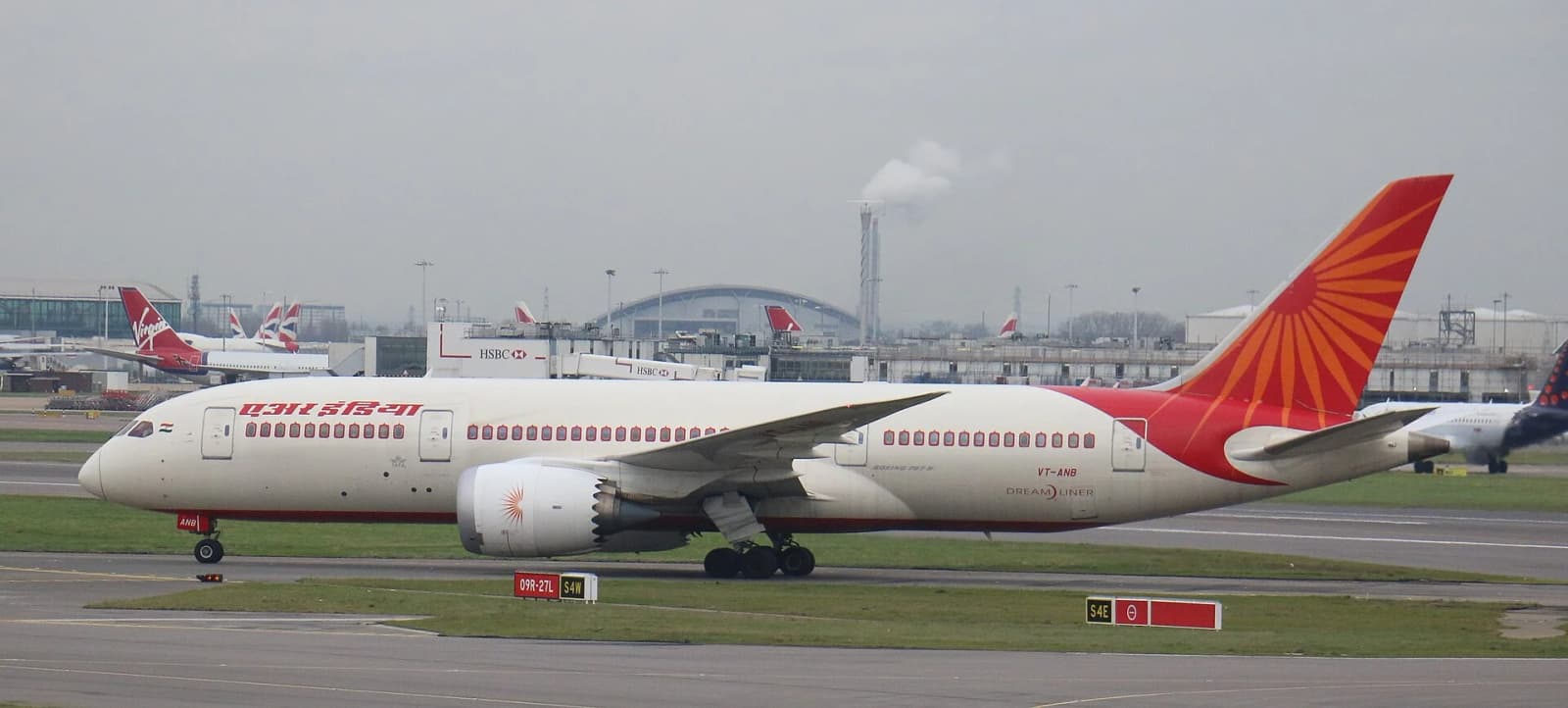
- 12 June 2025: Air India Flight AI171, a Boeing 787-8 flying to London Gatwick, crashed moments after taking off from Ahmedabad. Of the 242 people on board, 241 died, and 19 people were killed on the ground, a total of 260 deaths. Another 67 people on the ground were injured, Gulf News reported. Former Gujarat chief minister Vijay Rupani was among those killed. Captain Sumeet Sabharwal was the pilot-in-command and Captain Clive Kunder was the co-pilot.
- 12 July 2025: The AAIB published its preliminary report. It said both engines lost thrust after the fuel control switches moved from RUN to CUTOFF about three seconds after lift-off. The report did not say how or why the switches moved, which led to speculation about the pilots.
- 7 November 2025: Hearing a petition from the captain's father, Pushkar Raj Sabharwal, and another from the non-governmental organisation Safety Matters Foundation, the Supreme Court issued notices to the Centre, the DGCA and the AAIB. Justice Surya Kant, then not yet Chief Justice, said of the late captain, "Nobody can blame him for anything."
- 12 June 2026: On the first anniversary of the crash, the AAIB released an interim statement. It said "significant progress" had been made but gave no date for the final report. Investigators were still analysing aircraft systems, flight recorder data, engine components, maintenance records and operational information.
- July 2026: The Supreme Court put the petitioners' demand for a separate inquiry on hold until the final report was available. It said what happened next would depend on whether that report was "well-merited and accepted".
- 28 July 2026: The bench was told that the AAIB's draft final report would be filed in a sealed cover in the first week of October, according to The Federal. The Free Press Journal reported that the Centre had spoken of release by mid-September, with an extension to the end of October. Neither deadline was met.
What the different sides want
The petitioners. Mr Sabharwal, who is 91, the Safety Matters Foundation and a pilots' body want a court-monitored or independent inquiry, such as a court of inquiry. They argue that an accident this large should be investigated by an independent agency under the international protocols India has signed, and they question whether a team that includes DGCA officials can be impartial.
The Centre and the AAIB. The government says the investigation is almost complete and that its length reflects international consultation and the testing of components, not a deliberate delay. The AAIB has said that the sole purpose of an accident investigation is to improve aviation safety, not to assign blame or liability. It has asked the public and the media not to reach conclusions too early.
The court. So far the bench has chosen to wait. It has not ordered a parallel inquiry, and it has said its next step depends on the quality and acceptance of the final report.
What is established
- AI171 crashed in Ahmedabad on 12 June 2025, and 260 people died: 241 on board and 19 on the ground. One person on board survived.
- The AAIB's preliminary report says the fuel control switches moved from RUN to CUTOFF about three seconds after lift-off and both engines lost thrust.
- On 18 November 2026, the Solicitor General told the Supreme Court that the probe was at its "fag end", and the bench gave the Centre two to three weeks.
- The final report has not been published. The AAIB has cited specific rules to refuse to share cockpit voice and image recordings.
What is uncertain
- Why the switches moved. No official finding has said whether the switch movement was deliberate, accidental or the result of a fault. Earlier media reports that blamed the pilots were not official findings.
- When the report will be public. The new window is two to three weeks, but earlier deadlines in September and October slipped. It is also not clear whether the report will first go to the court in a sealed cover or be published straight away.
- Whether there will be an independent inquiry. That depends on how the court views the final report.
- The conflict-of-interest claim. The petitioners' objection to DGCA officials on the team has been argued in court but has not been ruled on.
Why it matters for Indian travellers
This was one of the deadliest air crashes involving an Indian airline, and the Boeing 787 is a widely used aircraft on India's long-haul international routes. The final report is expected to explain what caused the crash and to recommend any safety changes, whether in aircraft design, maintenance, cockpit procedures or regulation. Until it is out, families of the victims, pilots and passengers have only a preliminary report that sets out the sequence of events but not why they happened.
The case also tests how open India's accident investigation process is. The petitioners have questioned who sits on the investigation team and who gets to see the evidence, and that issue goes beyond this one crash.
What happens next?
The Supreme Court will take up the case again after the two-to-three-week adjournment, which points to early December 2026. No exact date had been reported. Before that, the Centre is expected to say whether the AAIB's final report is ready. If the report comes out, the bench will then decide whether to accept it or to consider the petitioners' demand for a separate inquiry.
Photo source · Steve Knight, CC BY 2.0