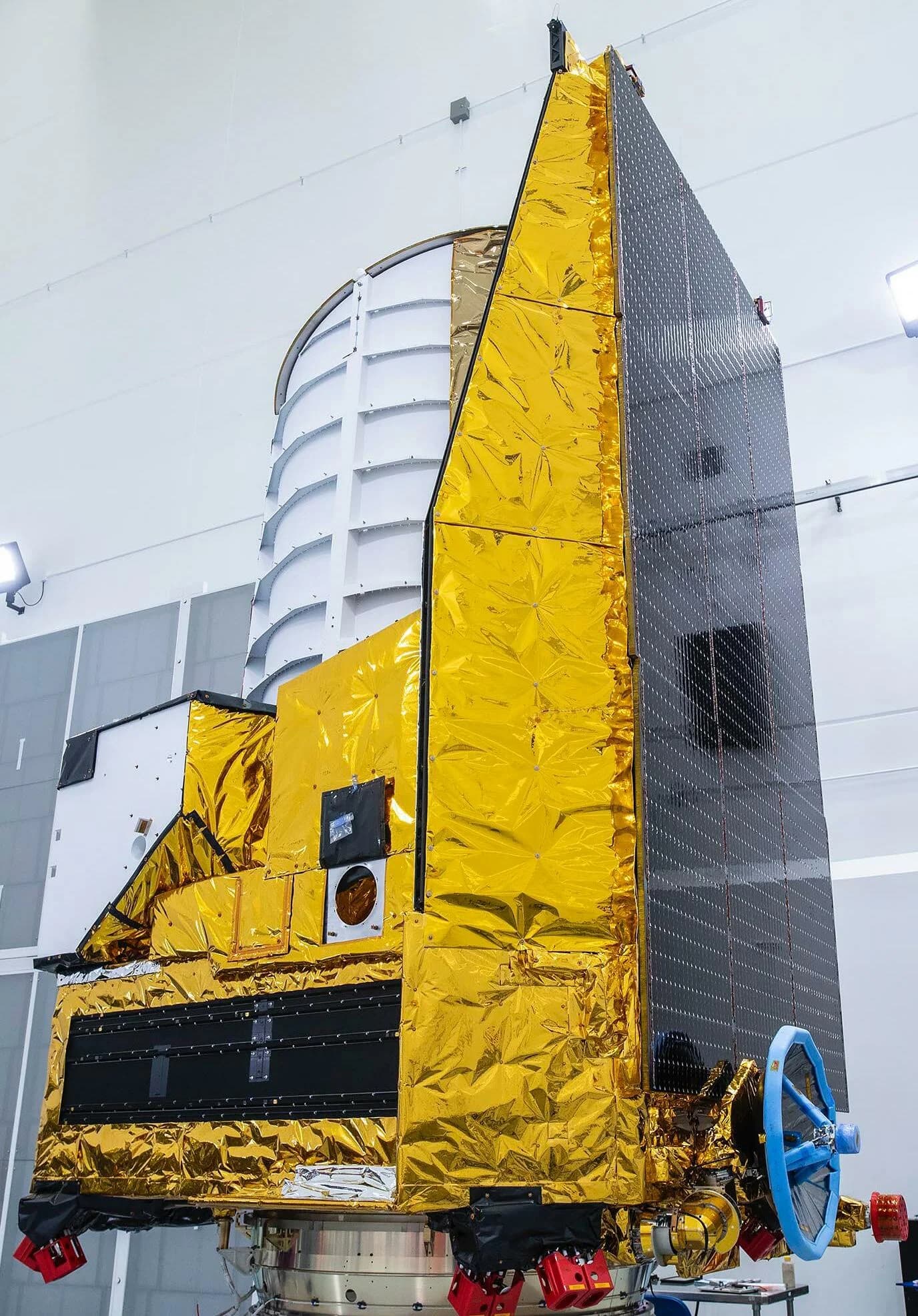
The European Space Agency's (ESA) Euclid space telescope—built to map billions of galaxies and study dark matter and dark energy—has unexpectedly discovered its first previously unknown comet, officially designated C/2026 S1 (Euclid), roughly 1.3 billion kilometres from Earth.
How Moving-Object Software Flagged the Streak
The comet first appeared across 16 exposures collected in five fields of the Euclid Deep Field North between September 16 and September 24, 2026. University of Helsinki doctoral researcher Mikko Pöntinen and the Euclid Consortium's Solar System Objects Science Working Group spotted a faint moving streak using custom detection software built to identify nearby foreground objects in deep-sky surveys.
Closer inspection revealed a fuzzy cloud surrounding the icy core—evidence of dust and gas outgassing typical of an active comet. After checking existing catalogues for matches, the team submitted observations to the International Astronomical Union's Minor Planet Center, which verified and named C/2026 S1 (Euclid) on October 8, 2026.
Steep Orbit and Lessons for Planetary Defence
Operating at a distance comparable to the span between Jupiter and Saturn, C/2026 S1 does not travel along the flat ecliptic plane shared by Earth and the major planets. Instead, it approaches on a steep trajectory arching high over the Solar System along an orbit taking thousands of years to complete.
Euclid deliberately avoids the ecliptic plane to cut down cosmic dust glare, and its step-and-stare survey rarely repeats a pointing on demand. As Euclid Archive Scientist Bruno Altieri and Project Scientist Valeria Pettorino noted, while this distant body is not an operational target for ESA's upcoming Comet Interceptor mission, the rapid identification and alert pipeline provides a real-world trial for coordinating rapid target alerts across missions.