Denmark's parliament, the Folketing, ratified a security agreement with the United States and Greenland on 19 November 2026 in Copenhagen. All 109 members present voted in favour and none voted against. The vote ends the parliamentary process for a deal meant to defuse a year of tension over US President Donald Trump's push to take control of the Arctic island.
The vote came after the bill's second reading in the 179-seat chamber, and there was no debate, AFP reported. All parties had already backed the text at the first reading on 12 November, which Foreign Minister Lars Løkke Rasmussen attended, according to the Associated Press and Reuters.
What does the agreement allow?
The agreement lets the United States widen its military presence in Greenland while confirming that the island stays under Danish sovereignty. It adds to a 1951 defence accord. According to the Associated Press, its main terms are:
- The US can modernise and expand its activities at Pituffik Space Base in north-western Greenland.
- The US can set up "defence areas" at Narsarsuaq in the south and Mestersvig in the east, and possibly at other sites.
- The deal stays in force even if Greenland later becomes independent.
AFP reported that the agreement also keeps companies from countries outside the European Union and NATO out of strategic sectors, a measure aimed at limiting Chinese and Russian influence through investment. Reuters reported that it allows the US to deploy a "Golden Dome" missile defence system and reaffirms Greenlanders' right to self-determination.
How did the deal come about?
Trump, Danish Prime Minister Mette Frederiksen and Greenland's Prime Minister Jens-Frederik Nielsen signed the agreement in New York on 22 September 2026. Greenland, a self-governing Danish territory of about 57,000 people, has rich mineral resources. Trump had repeatedly said the US should control it, and in January his refusal to rule out military or economic force set off a diplomatic crisis inside NATO, Reuters reported. Months of negotiations followed, largely behind closed doors, according to the AP.
Greenland's own parliament approved the deal earlier in November. Sixteen members voted in favour, seven abstained and none voted against, Al Jazeera reported.
What happens next?
The agreement takes effect once Denmark notifies Washington in a diplomatic note that its internal procedures are complete. It is not a treaty, so it does not need a vote in the US Senate, according to Reuters and the AP. The AP reported that Kenneth Howery, the US Ambassador to Denmark, praised the "strong support" in the Danish parliament and called the agreement "a tremendous accomplishment" in a post on X.
Is this the end of the dispute?
Not necessarily. Mikkel Vedby Rasmussen, a political science professor at the University of Copenhagen, told Reuters there were "many indications that this is not an end, but rather a beginning." He said the deal could give Washington a path to more influence over security decisions and over some extraction of strategic resources. Other experts quoted by Reuters said the deal adds little new US military access, because the US already has its northernmost base on the island.
Why does it matter beyond the Arctic?
The deal does three things that matter outside the region. It writes the US-led security order in the Arctic into law, it opens the way for a US missile-defence role on the island, and it formally restricts investment from countries outside the Western alliance in Greenland's strategic sectors. For countries with economic and scientific interests in the far north, it shows that access to Greenland is now closely tied to security alignment with Washington and NATO.
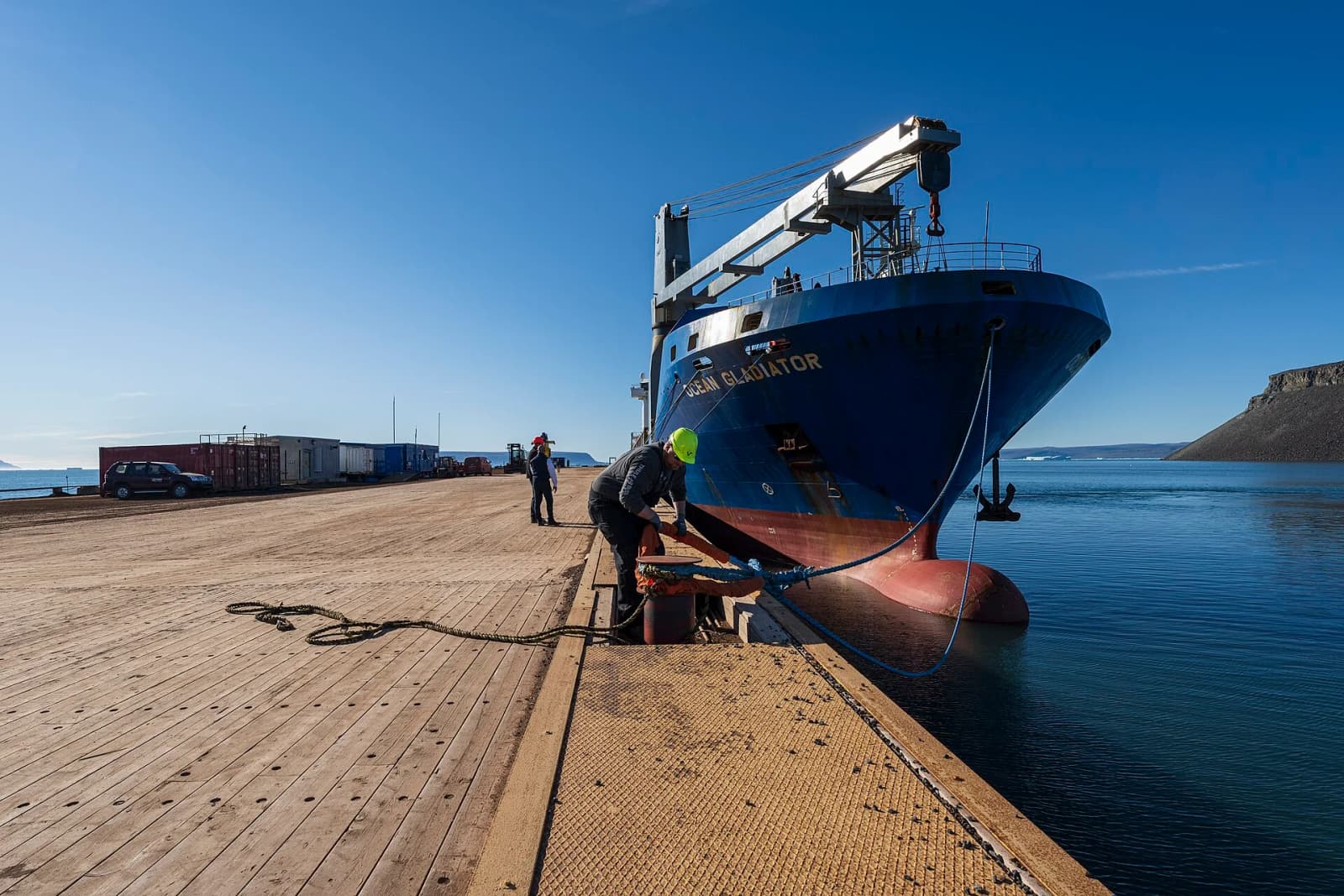
Photo source · U.S. Space Force photo by Paul Honnick, public domain