Delhi's air slipped into the "severe" band on Friday, 13 November, for the first time this winter, and two ministers in the Delhi government responded by telling half the staff in their departments to work from home. By Saturday morning the city-wide hourly reading had eased into the "very poor" range, but several monitoring stations were still above 400, and forecasters see no rain to wash the smog away before the weekend ends.
What happened on Friday
According to Central Pollution Control Board (CPCB) data cited by PTI, Delhi's average Air Quality Index stood at 403 at 6.05 am on Friday and stayed at that level at 8 am and 9 am. Of the 58 stations reporting at 8 am, 33 were in the "severe" category, 24 were "very poor" and only one was "moderate", the agency reported.
The worst readings came from IIT Delhi (488), Chandni Chowk (479) and Delhi University's North Campus (478), followed by Burari Crossing (456), ITO and Jawaharlal Nehru University (451 each), Jahangirpuri (430), Wazirpur (427), Anand Vihar (419) and Rohini (413). Even the IGI Airport Terminal 3 station logged 403.
A separate ANI report, carried by The Tribune, said the overall AQI touched 494 at 7.31 am, a figure that was widely repeated across news outlets through the day. The two numbers come from different snapshots of the same CPCB network, and readers should note that the official figure for any day is the 24-hour average released at 4 pm.
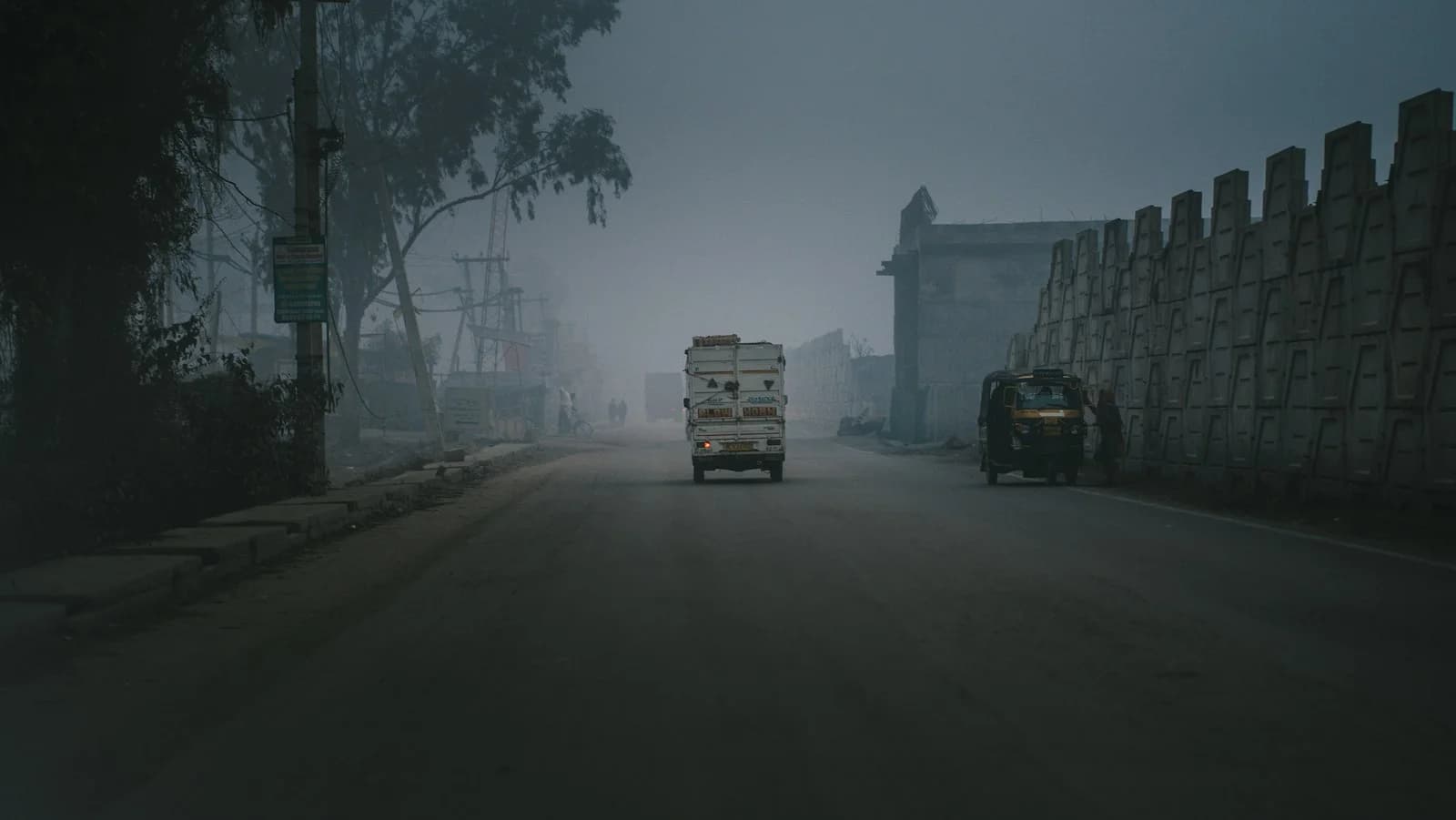
Dense fog mixed with pollution cut visibility in several parts of the city on Friday morning. PTI noted that the minimum temperature at Safdarjung was 16.2 degrees Celsius, 2.7 degrees above normal.
Half of staff in two departments told to stay home
Environment Minister Manjinder Singh Sirsa and Health Minister Pankaj Kumar Singh directed their departments to move to a 50 per cent work-from-home arrangement, Millennium Post reported early on Saturday. The stated aim is to cut vehicle movement and emissions while keeping essential services running.
Under the order, the rest of the staff will work from home, while administrative secretaries and heads of departments can still call employees into office when they are needed for essential or emergency public services, the report said. It linked the move to the Delhi government's Winter Action Plan, in force since 1 November, which caps physical attendance of government employees at 50 per cent.
The ministerial orders sit on top of a broader regional direction. The Commission for Air Quality Management (CAQM) had, in an order dated 30 October and signed by Member Secretary Tarun Kumar Pithode, told government and private offices in Delhi, Gurugram, Faridabad, Sonipat, Ghaziabad and Gautam Buddha Nagar (Noida) to keep physical attendance to no more than half their staff from 5 to 20 November, The Tribune reported. Industrial establishments and essential services where remote work is not feasible are exempt.
How Delhi got here
The city's air has been worsening for weeks. CAQM invoked Stage III of the Graded Response Action Plan (GRAP) across the National Capital Region on 6 November, according to PTI and Outlook. Stage III bars dust-generating construction and demolition, shuts stone crushers and mining, and restricts BS-III petrol and BS-IV diesel light vehicles in Delhi and specified NCR districts, along with curbs on older diesel goods vehicles.
Outlook reported that Delhi's AQI was 323 ("very poor") on Thursday, 12 November, a day before the jump into the severe range. PTI said the last time Delhi recorded a "severe" day was 19 January this year, when the 24-hour average was 410.
The October CAQM order explained the timing of its pre-emptive office curbs: data for 2018 to 2025 show that pollution in the region tends to peak in the first and middle weeks of November, The Tribune reported.
Where things stand on Saturday
The Indian Institute of Tropical Meteorology's early warning system listed North Campus at 423, IIT Delhi at 419, ITO at 414, Burari Crossing at 412 and DTU at 402 at 6 am, according to Outlook.
The CAQM's GRAP Stage III remained in force on Saturday, Outlook and CareerIndia reported. Stage IV, the highest level, is triggered when the 24-hour average AQI rises above 450, PTI noted. No Stage IV order had been reported as of Saturday morning.
What doctors are saying
Hospitals are reporting more breathing complaints. Dr Avi Kumar, head of pulmonary medicine at Fortis Escorts, told The Daily Jagran that Fortis hospitals in Delhi had seen a 7 to 10 per cent rise in outpatient cases and a 5 to 7 per cent rise in admissions over three to four days. Dr Tanu Kumar, a paediatrician at a Delhi government hospital, told the same publication she had seen close to a 5 per cent rise in respiratory outpatient cases, with more children needing nebulisation.
Dr Girish Sindhwani, head of pulmonary medicine at AIIMS Rishikesh, told the paper that pollution affects the heart and other organs, not just the lungs, and advised people with asthma, COPD and the elderly to avoid early morning walks in winter. He cautioned that air purifiers offer limited, poorly documented benefit and work only in a closed room. The doctors recommended well-fitted N95 or N99 masks outdoors.
According to the CPCB health classification cited by Outlook, "severe" air can affect even healthy people, and those with heart or lung disease may be seriously affected even during light activity.
A political fight over the numbers
The figures themselves are contested. On Thursday, AAP leader Saurabh Bharadwaj accused the BJP-led Delhi government of understating pollution and called it "a fraud against the 2 crore people of the city", The Tribune reported. Citing an analysis by the Centre for Research on Energy and Clean Air (CREA) of hourly PM2.5 data from 59 stations, he claimed pollution was 49 per cent higher than shown. The CREA analysis, as reported, found 255 missing hourly station records between 4 pm on 8 November and 4 pm on 9 November. These are claims that have not been independently verified.
Established and uncertain
What is established: Delhi entered the "severe" category on Friday morning for the first time this season according to CPCB data; GRAP Stage III remains in force; and two ministers have ordered 50 per cent work from home in their departments. What is less certain: the exact peak value, since reports cite 403 and 494 from different snapshots; whether further restrictions under Stage IV will follow; and the disputed claims about the accuracy of the monitoring data.
What happens next
The India Meteorological Department expects dry, partly cloudy weather with light winds over Delhi through 16 November, which means pollutants are likely to linger, CareerIndia reported. IITM's forecast, cited by Outlook, sees air quality staying "very poor" until 16 November. The Week reported that authorities are preparing fresh cloud-seeding trials with a team from IIT Kanpur, though an official said the flights depend on suitable cloud conditions and the IMD's seven-day outlook shows no rain for the region. The CAQM's office attendance order is due to lapse on 20 November unless it is extended.