Chief Justice of India (CJI) Surya Kant has taken at least two cases away from a Supreme Court bench headed by Justice Ahsanuddin Amanullah in New Delhi, according to reports published on 18 November 2026 by the Hindustan Times and followed by The Times of India, The Wire, LawBeat and LawChakra. The reports, which rely on people aware of the decision, say the bench had turned individual disputes into nationwide public interest litigations (PILs) even though PILs are not among the subjects allotted to it. The Supreme Court has not issued a statement, and Justice Amanullah could not be reached for comment, The Wire and LawChakra reported.
The move puts a spotlight on one of the least visible but most powerful parts of how India's top court works: who decides which judge hears which case.
What exactly happened?
The CJI used his administrative power as "master of the roster" to move two part-heard matters to other benches, the reports say. Before doing so, he consulted four of the senior-most judges: Justices Vikram Nath, B.V. Nagarathna, M.M. Sundresh and P.S. Narasimha.
The two cases are:
- Ayesha Jain vs Amity University, Noida. It began as a student's complaint that she was harassed and lost an academic year after legally changing her name. A bench of Justices Amanullah and N.V. Anjaria widened it into a nationwide look at how private universities are set up, funded and regulated, issuing directions to the Union government, States and regulators, according to LawBeat. LawChakra reported that a September 2026 direction asked private universities for five years of audited accounts. The case now goes to a three-judge bench headed by Justice Vikram Nath, with Justices R. Mahadevan and Aparesh Kumar Singh, and is listed for 19 November.
- Loganathan vs State of Tamil Nadu. It started with a one-and-a-half-storey building in Chennai built without an approved plan. From 25 March 2026, a bench of Justices Amanullah and R. Mahadevan took up unauthorised construction and commercial use of residential property across the country, sought replies from States and civic bodies including those in Delhi and the National Capital Region, and appointed Senior Advocate Ajit Kumar Sinha as amicus curiae, LawBeat reported. It is expected before a bench headed by Justice B.V. Nagarathna on 23 November.
Is a judge allowed to hear any case he chooses?
No. Under the Supreme Court's settled position, only the Chief Justice allocates cases, and a bench cannot assign a matter to itself. The reports cite a line of judgments for this, including State of Rajasthan vs Prakash Chand (1997), Jasbir Singh vs State of Punjab (2006), the five-judge ruling in Campaign for Judicial Accountability and Reforms vs Union of India (2017) and Shanti Bhushan vs Supreme Court of India (2018). In the 2006 case, the court said a judge who believes a matter belongs before another bench should seek the Chief Justice's orders.
The roster is a public document. The Supreme Court's roster of work for fresh cases, in force from 26 October 2026, lists "PIL related to all subject categories" against the CJI and six judges: Justices Vikram Nath, B.V. Nagarathna, M.M. Sundresh, P.S. Narasimha, J.B. Pardiwala and Dipankar Datta. Justice Amanullah's list covers subjects such as civil law, criminal law, family law, labour law, service law, rent control and transfer petitions, but does not include PILs.
That gap is the core of the reported reasoning. A source quoted by The Wire and LawBeat said that because Justice Amanullah does not have PILs in his roster, his bench should have referred the question to the CJI through the court's registry if it felt a matter needed PIL treatment.
Timeline
- 25 March 2026: The Amanullah-Mahadevan bench begins proceedings in the Loganathan matter and widens it to the whole country.
- 4 August 2026: According to The Times of India, the same bench orders States and Union Territories to remove stray animals from public places, an order later challenged by a Uttar Pradesh resident on the ground that most such strays are cows.
- September-October 2026: Further directions in the Amity matter, including the call for audited accounts, LawChakra reported.
- About four weeks before 18 November: At a full court meeting, the CJI tells judges to keep to the subjects allotted to them, the reports say. One person aware of the meeting said the CJI "was categorical" that judges "ought to work as per the roster".
- 26 October 2026: The current roster for fresh cases takes effect.
- 18 November 2026: The reassignment is reported.
- 19 and 23 November 2026: The two cases are due before their new benches.
The people involved
According to the Supreme Court's official list of judges, CJI Surya Kant's term runs until 9 February 2027. Justice Amanullah joined the Supreme Court on 6 February 2023 and is due to retire on 1 June 2030. Justices Vikram Nath and B.V. Nagarathna were both appointed on 31 August 2021.
The different perspectives
For the reassignment: Supporters argue that orderly case allocation protects the court's credibility. If any bench can turn a single dispute into a national inquiry, the CJI's control over who hears PILs would mean little. The 2012 ruling in Kishore Samrite vs State of Uttar Pradesh, cited in the coverage, also warns that public interest claims must be examined carefully to prevent misuse.
The critics' concern: Sections of the Bar have long argued that the power to allocate and withdraw cases should be exercised transparently and should not be used to move matters already being heard, LawChakra noted. Senior Advocate Dushyant Dave, in an earlier article for The Wire about a separate contempt case, argued that the CJI should not interfere with a matter already assigned to a bench, relying on the Shanti Bhushan judgment. That criticism concerns a different case, but it shows the debate the latest decision will feed into.
The religious angle: The Times of India reported that the move averted a "potential religious row" tied to the stray-animal order. The applicant from Uttar Pradesh argued that cows are revered as "gaumata" and asked that stray cattle be housed in "properly funded and regulated gaushalas" instead. It is not clear from the reports how that order connects to the two cases that were moved.
Why does this matter to Indian readers?
Both cases touch large numbers of people. The Amity matter had grown into scrutiny of how private universities are run and funded, an issue for students and parents who pay their fees. The Loganathan matter concerns illegal buildings and the use of homes for shops and offices in cities including Delhi and the National Capital Region, which affects residents, property buyers and civic bodies. The new benches can continue, narrow or reset the wider exercises, so the directions issued so far may not be the final word.
More broadly, the episode shows how judicial administration shapes outcomes. Which bench hears a PIL can decide how far a case goes. That is why questions about transparency inside the Supreme Court keep returning, as in the recent plea to bring Collegium minutes under the Right to Information Act.
What is established
- The Supreme Court's roster for fresh cases, effective 26 October 2026, gives PIL work to the CJI and six named judges; Justice Amanullah's allotted subjects do not include PILs.
- Supreme Court judgments, including the five-judge 2017 ruling, hold that the CJI alone allocates cases and benches cannot assign matters to themselves.
- The Supreme Court's official list gives CJI Surya Kant's retirement date as 9 February 2027.
- Multiple outlets independently report the same two cases, the same four consulted judges and the same new benches and dates.
What is uncertain
- No administrative order or official statement on the reassignment has been made public; the reasons come from unnamed sources.
- Justice Amanullah's view is not known.
- Whether more cases were moved: the reports say "at least two", and The Times of India said the CJI told senior judges that cases before other benches would be surveyed for similar widening.
- The exact date of the full court meeting and of the reassignment itself.
- Whether the 4 August stray-animal order and other wide directions will stand, be modified or be re-heard.
What happens next
The Amity matter is listed before Justice Vikram Nath's three-judge bench on 19 November, and the Loganathan matter is expected before Justice Nagarathna's bench on 23 November. Watch whether the new benches keep the nationwide scope, return to the original disputes or seek a formal PIL registration. According to The Times of India, the CJI has also signalled a wider review of cases whose scope has been expanded, with decisions on placing them before suitable benches to follow. The Supreme Court has not announced a timeline for that review.
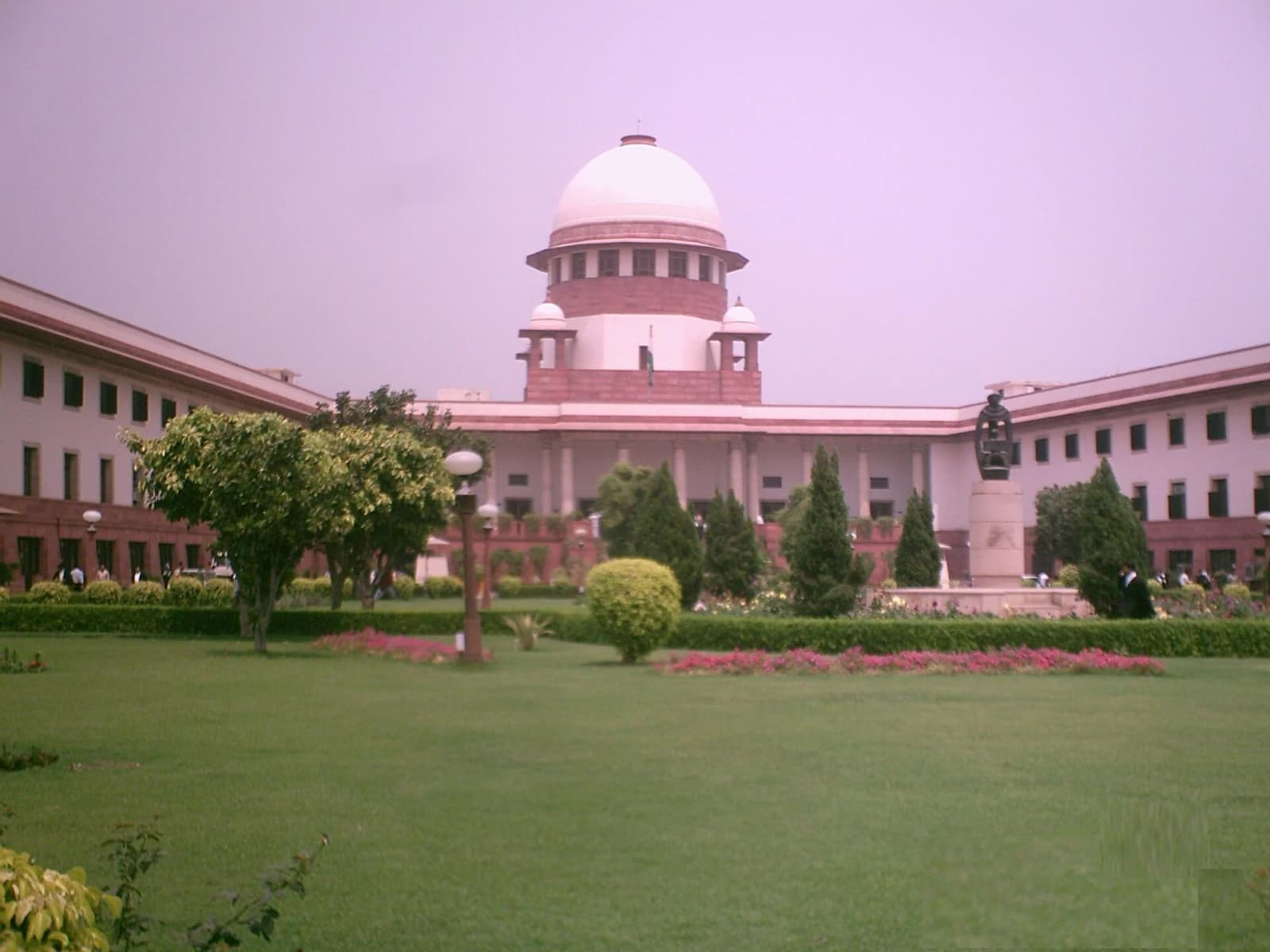
Photo source · Legaleagle86, CC BY-SA 3.0