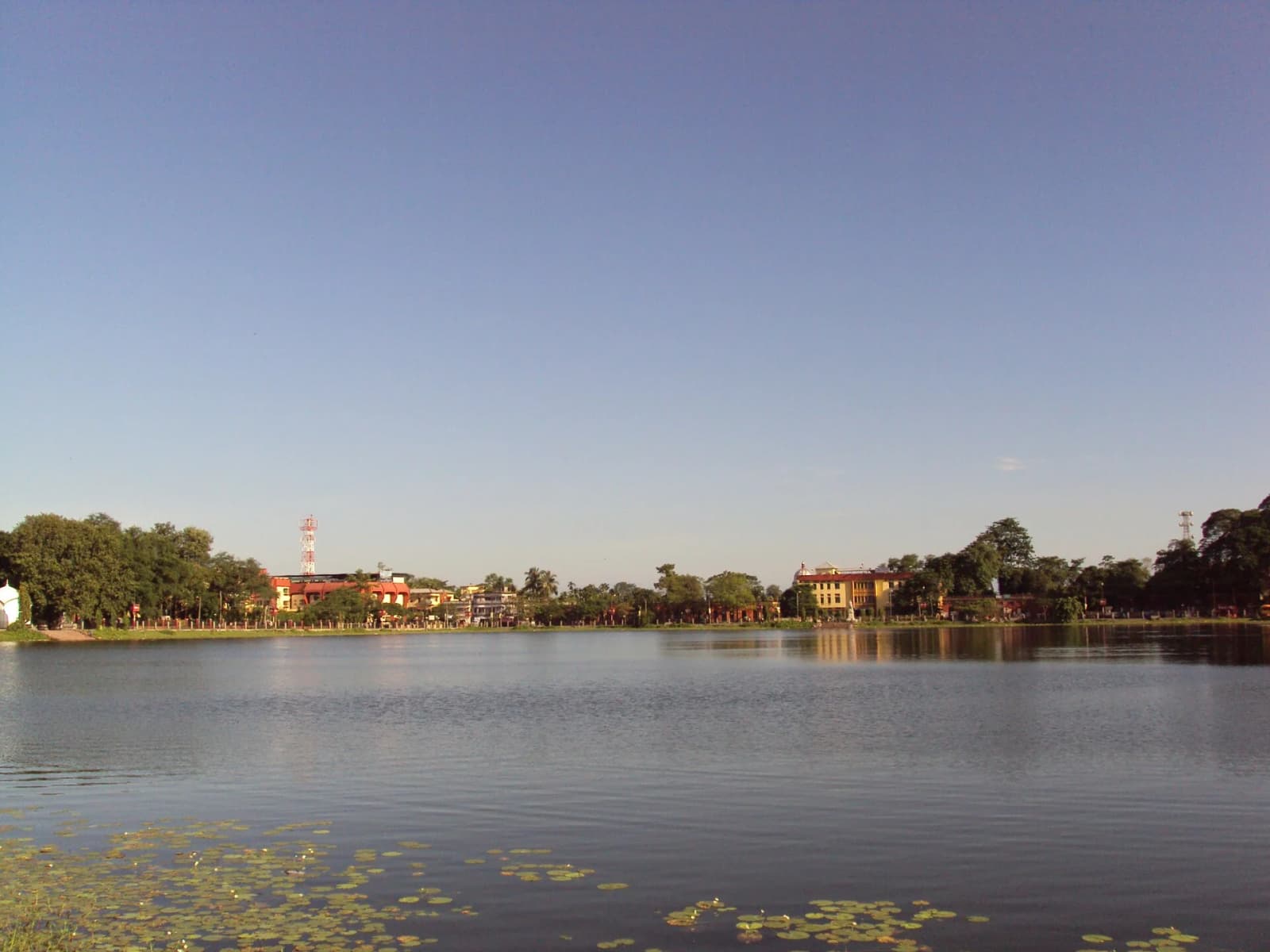
The Calcutta High Court has allowed devotees to perform Chhath Puja at Sagardighi Ghat in Cooch Behar on 15 and 16 November, describing its order as a "special case" because the festival was only days away, while requiring that the rituals follow National Green Tribunal (NGT) directions and avoid plastic altogether.
The order, passed by Justice Krishna Rao and reported by LiveLaw on Friday, 13 November 2026, directs the authorities to make the necessary arrangements at the ghat. It also tells the administration to plan ahead so that devotees can hold the festival at the same spot next year without having to return to court.
What the court ordered
According to the report of the hearing, the NGT has barred immersions at Sagardighi on environmental grounds, and its restrictions also cover the use of non-biodegradable material at the water body. The petitioners told the court they would follow the tribunal's directions, keep non-biodegradable items away, clean the ghat once the rituals were over and make sure the water was not polluted.
The state side suggested that the puja be moved to another venue. The petitioners resisted, arguing that devotees would struggle to reach an alternative site.
Justice Rao noted that the rituals were due to begin on 15 November and that there was not enough time for the state to put other arrangements in place. On that basis, the court said, "as a special case, this court directs the respondent to make necessary arrangements" for the puja at Sagardighi Ghat, with proper compliance of the NGT's orders. The judge made clear that the order was being passed only because of the immediate schedule.
The conditions attached are specific:
- no plastic material may be used by the petitioners;
- the area must be kept clean;
- proper arrangements must be made for disposing of waste.
A plea that almost missed the festival
The relief came after an earlier setback the same day. LiveLaw reported that Justice Saugata Bhattacharyya had declined to hear the plea urgently and asked the petitioner to mention it on Monday. Counsel had argued that the puja was fixed for Sunday, that permission had not been granted, and that the petition would become pointless once the date had passed.
The court also recorded that the petitioners had approached it repeatedly for permission, which is why it asked the administration to arrange for next year's celebration in advance.
Background: a recurring dispute
This is not the first time the Sagardighi celebration has ended up in court. In November 2024, the Jalpaiguri Circuit Bench of the High Court allowed Chhath at the historic pond, setting aside a ban by the Cooch Behar police administration on condition that pollution-control measures were followed, the Millennium Post reported at the time. That plea had been filed as a public interest litigation by the North Bengal Basphor and Harijan Welfare Association.
The Bengali daily Uttarbanga Sambad reported on Saturday that, after the 2024 intervention, the festival had gone ahead without trouble, but permission again became contested this year. Organisers first approached the District Magistrate's office and then the local MLA, who is also Speaker of the state Assembly, before returning to the High Court when neither produced a solution, the paper said. Members of the Harijan community and the organisers welcomed the latest order, it added.
The paper also reported that the Vishwa Hindu Parishad held a press conference in Cooch Behar on Saturday morning, where its district leaders alleged that the community had repeatedly faced obstacles over the puja.
Why it matters
The order tries to balance two competing claims: the right of a community to observe a festival at a place it says it has long used, and environmental limits set by the green tribunal to protect a heritage water body. Rather than lifting the NGT restrictions, the court tied its permission to them, and placed the burden of cleanliness and waste disposal on the organisers.
What happens next
Chhath rituals at Sagardighi are scheduled for 15 and 16 November. The direction to the administration to prepare for next year's festival is likely to be tested when the question of permission arises again in 2027.
PS · Amartya Bag, CC BY-SA 2.0