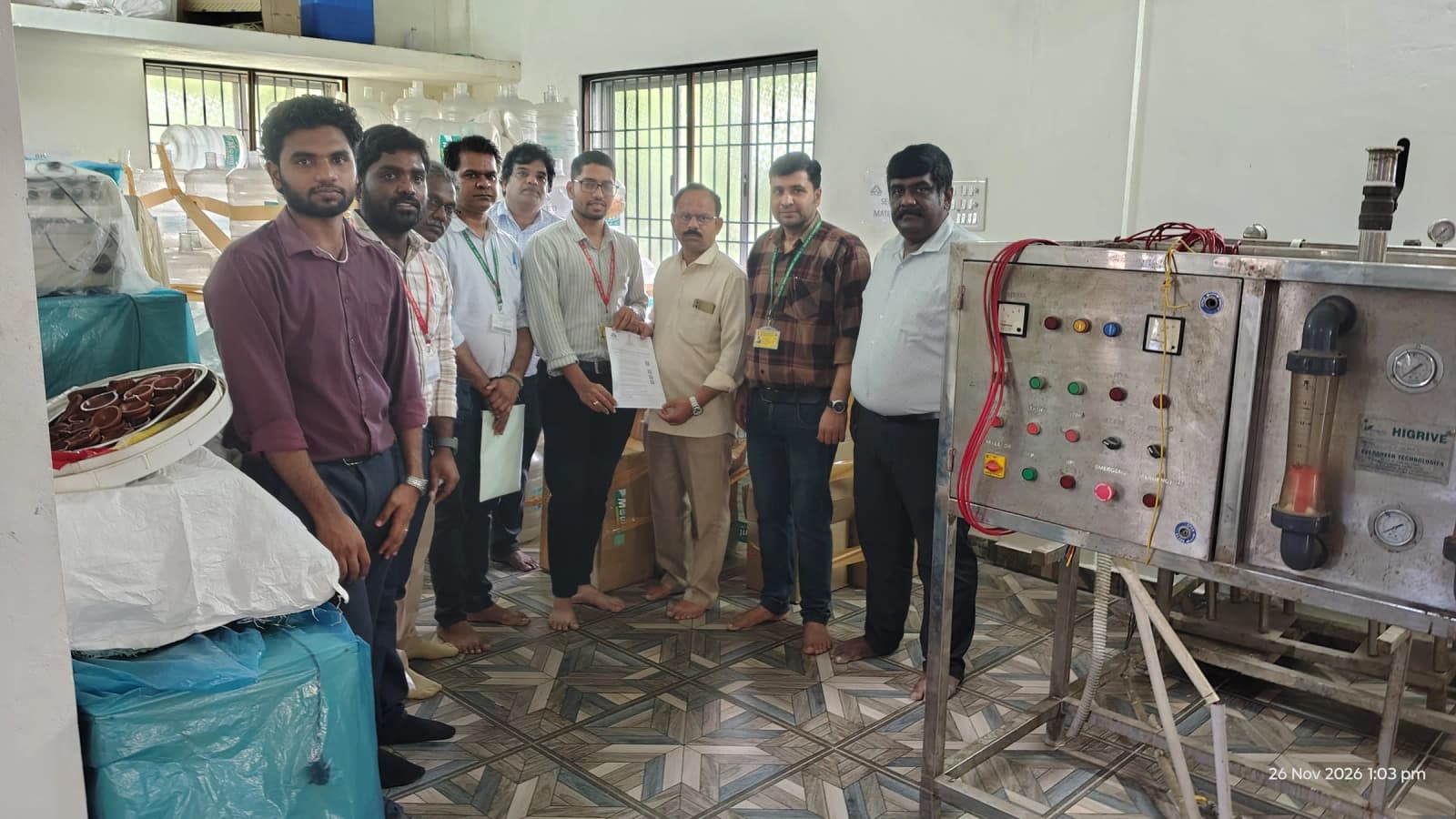
Officials of the Bureau of Indian Standards (BIS), Chennai Branch Office, carried out a search and seizure operation on 26 November 2026 at a packaged drinking water unit in Guduvancherry, Chengalpattu district, Tamil Nadu, over the suspected use of the ISI mark without a valid licence, according to a release issued through PIB Chennai.
The unit, M/s AVN Traders on Madambakkam Main Road, makes and sells drinking water under the brand name 'Mount Aqua', the release said. BIS acted under Section 28 of the Bureau of Indian Standards Act, 2016.
What did BIS officials seize?
BIS officials seized 16 jars of 20 litres, 144 two-litre bottles, about 1,10,000 labels and stickers, and roughly 175 empty 20-litre PET jars, all of which carried the ISI mark, according to the bureau. The items were sealed for further action under the Act.
According to BIS, the products and labels referred to Indian Standard IS 14543 and quoted a BIS licence number, although the unit did not hold a valid licence allowing it to use the Standard Mark. The bureau described this as a suspected contravention of Section 17(3) of the Act. The findings have not yet been tested in any proceedings, and BIS said further action would depend on the results of its investigation.
Is BIS certification compulsory for bottled water?
No, under the present framework BIS certification for packaged drinking water is voluntary, said S. D. Dayanand, Scientist-F, Senior Director and Head of the BIS Chennai Branch Office. He added that any business choosing to print the ISI mark on its bottles, jars, labels or packaging must first obtain and hold a valid BIS licence for that product.
Dayanand said the voluntary status of certification does not let anyone claim BIS approval or display the mark without authorisation. He urged manufacturers, distributors, dealers and traders to check that the products they make, buy or sell carry the mark only under a genuine licence that applies to that product, and to follow the rules of other regulators, including the Food Safety and Standards Authority of India (FSSAI), where relevant.
What penalties does the law provide?
Under Section 29(3) of the BIS Act, a person who breaches Section 17 can face imprisonment of up to two years, or a fine, or both, the release said. The fine is at least ₹2 lakh for a first offence and at least ₹5 lakh for later offences, and it can go up to ten times the value of the goods involved.
How can consumers check an ISI mark?
BIS said that a printed ISI mark or licence number on a pack does not by itself prove that a product is certified. It advised consumers and businesses to verify the mark and licence details on the BIS Care app or the bureau's website, bis.gov.in, before relying on such a claim.
Suspected misuse of the mark can be reported to the Chennai Branch Office at cnbo@bis.gov.in or through the BIS Care app, the bureau said.
What happens next?
The seized stock remains sealed while BIS completes its investigation. The bureau said it will decide on further action under the BIS Act based on what the investigation finds.
Photo source · Press Information Bureau (PIB Chennai)