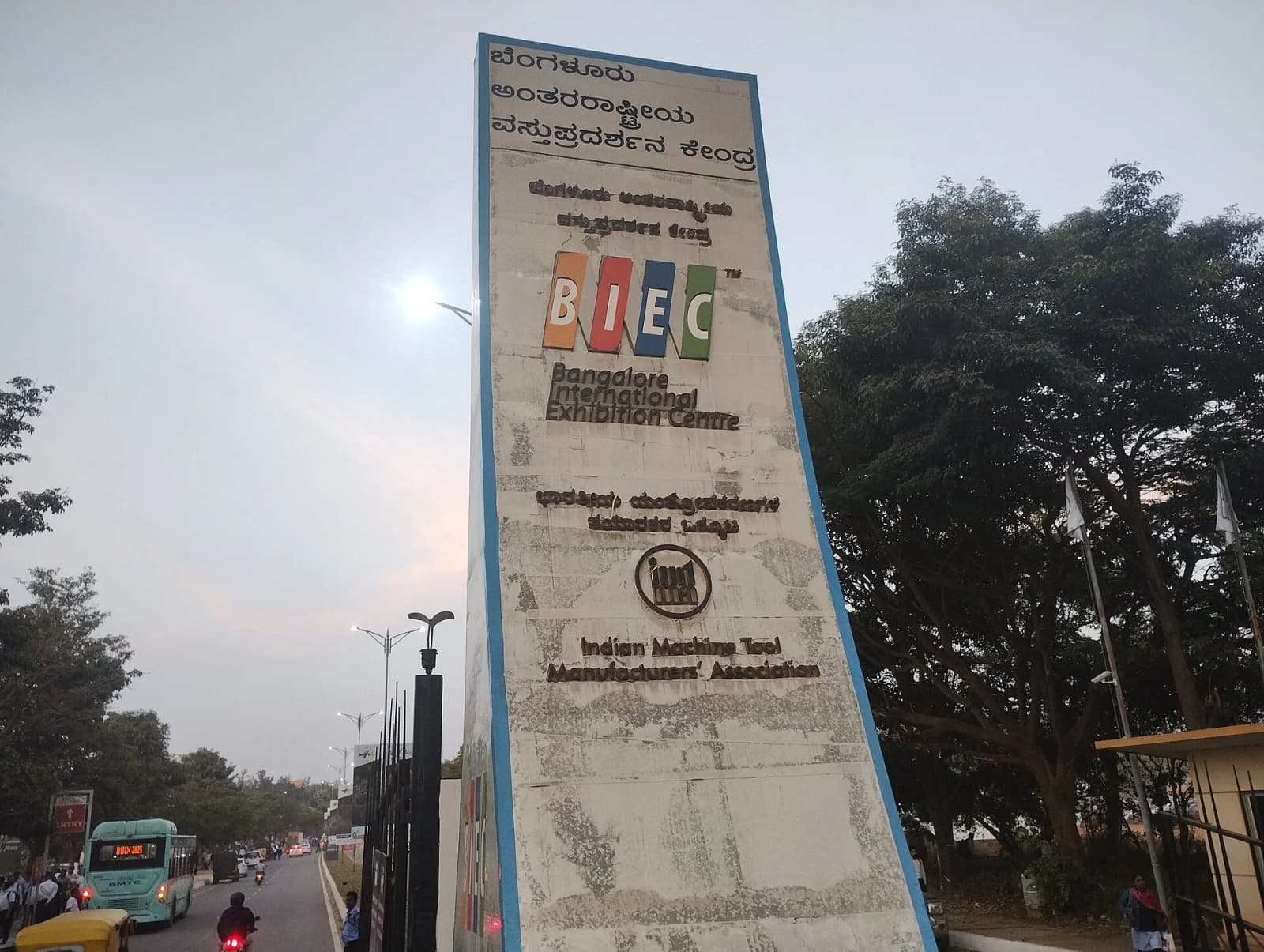
The 29th Bengaluru Tech Summit opened at the Bangalore International Exhibition Centre (BIEC) on Tuesday, 17 November, with Karnataka Chief Minister D.K. Shivakumar inaugurating the three-day event and the state government showcasing six initiatives spanning artificial intelligence, robotics, semiconductors and health technology. The summit, themed "AI & Beyond", runs until 19 November.
"Our commitment is clear: to build technologies and industries that serve not just India, but the world," Shivakumar said, according to the summit's official release. He said the state wants to move beyond being a technology services hub towards advanced research and semiconductor manufacturing.
Six initiatives on show
The release listed the following projects presented at the inauguration:
- Karnataka AI Hub at IIIT-Bangalore, described as a first step towards a proposed AI University, with a focus on skilling, research and entrepreneurship.
- BRAINZ (Bengaluru Robotics & AI Innovation Zone), a nine-acre hub with ARTPARK at the Indian Institute of Science (IISc) for robotics, AI and deep tech. It aims to catalyse ₹1,000 crore of investment over five years.
- 2D Innovation Hub, a proposed national 200-mm semiconductor research and pilot-line facility led by IISc, with a building of about 1,00,000 sq ft, a 15,000 sq ft cleanroom and 80–90 tools.
- INFIfab, a proposed national semiconductor facility at IISc's Centre for Nano Science and Engineering covering about 96,284 sq ft, including a 20,000 sq ft cleanroom, for work on advanced packaging, MEMS, photonics, quantum and neuromorphic computing.
- K-HEAL (Karnataka Health Engineering & Advanced Lifesciences), a centre of excellence under the Department of Electronics, IT and BT for health tech, med tech and assistive technology.
- Innoverse, a foundation to support deep-tech startups working on autonomous systems, from underwater applications to space.
The two semiconductor facilities are described in the release as proposed, not operational.
AI training target of 63,200
The government said it aims to train 63,200 engineering and diploma students and working professionals in AI. Five companies — Google, Salesforce, Pega Systems, Sarvam AI and Gnani.ai — have proposed programmes covering generative AI, agentic AI, AI agent development, voice AI, cloud, data analytics and responsible AI, combining hands-on training with capstone projects and certification. These programmes, too, are at the proposal stage.
The numbers the Chief Minister cited
Making the case for the state, Shivakumar said Karnataka's software and services exports stand at about $173 billion and that the state drew 26.7% of India's FDI equity inflows in the first half of 2025-26. He said more than 30 new global capability centres brought in over $1 billion in 2025, and that the state has over 24,000 recognised startups, according to the release.
Who is attending
The inauguration was attended by Karnataka IT and Biotechnology Minister Priyank Kharge; Valérie Pécresse, President of the Regional Council of Île-de-France; Puneet Chandok, President of Microsoft India and South Asia; and Anand Ramamoorthy, founding country head of Micron India, among others. Seung-hwan Mok, South Korea's Deputy Minister of Startups, Venture and Innovation, was also present, The Public World reported.
Organisers expect more than 10,000 delegates, 700 speakers and 1,000 startups, with over 140 sessions across 16 tracks, the same report said. The official release puts participation at more than 75 countries; The Public World's report says more than 65.
What happens next
The summit, organised by Karnataka's Department of Electronics, IT and Biotechnology and co-hosted by Software Technology Parks of India, continues at BIEC on 18 and 19 November. Timelines for the proposed AI University, the two semiconductor facilities and the skilling programmes were not given in the release.
PS · Gpkp, CC BY-SA 4.0