Central bankers and computer scientists are raising fresh concerns that rapid advances in artificial intelligence-assisted mathematical proof discovery could eventually test the assumptions underpinning modern digital encryption far sooner than expected.
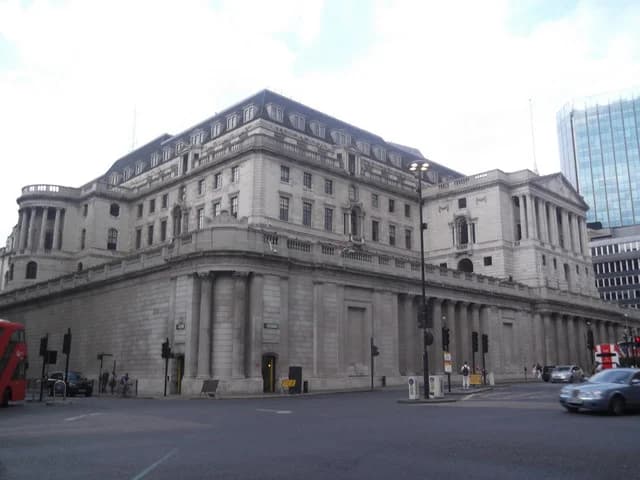
Bank of England Governor Andrew Bailey recently highlighted the issue alongside financial stability officials, pointing to mounting anxiety over "Q-Day"—traditionally defined as the moment quantum computers become powerful enough to crack RSA and elliptic-curve cryptography—while researchers examine whether AI systems could uncover mathematical shortcuts first.
Landmark AI Proofs Prompt Fresh Debate
The debate intensified following recent milestones in formal mathematics, including mathematician Levent Alpöge's Lean-verified work related to the Riemann hypothesis developed with Claude, as well as a VP≠VNP complexity separation proof produced through collaboration involving Anthropic and OpenAI systems.
Computer scientist Scott Aaronson and other cryptography specialists have cautioned against assuming deployed systems will fall overnight. Establishing theoretical separations such as VP≠VNP does not directly break real-world encryption, and factoring or discrete-logarithm problems can remain computationally intractable even if AI speeds up formal theorem verification.
Regulators Push Post-Quantum Readiness
Even without an imminent mathematical breakthrough, financial regulators warn that banks, payment networks such as Swift, and government agencies cannot wait for proof of an attack before upgrading infrastructure, especially because encrypted communications harvested today could be decrypted years later.
UK financial authorities, including the Bank of England and the Financial Conduct Authority, have pressed institutions to map cryptographic dependencies and accelerate migration toward post-quantum cryptography standards designed to withstand both quantum hardware and algorithmic surprises.