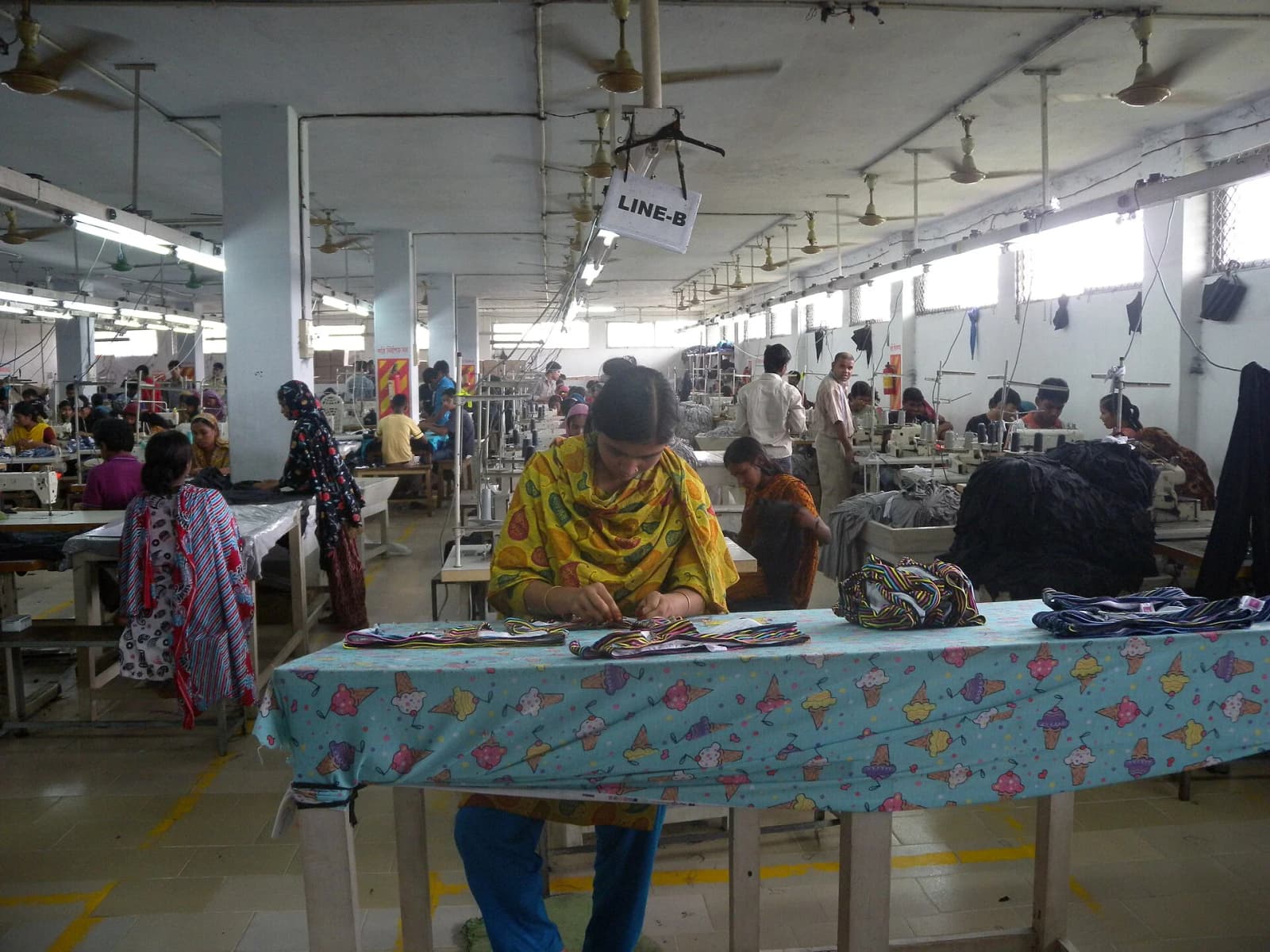
More than 60 garment factories around Dhaka were shut on Sunday, 15 November, as fresh labour unrest hit Bangladesh's biggest export industry a day before the country's minimum wage board is due to meet to discuss pay for garment workers.
According to The Business Standard (TBS), a Dhaka-based business daily, 13 factories in Gazipur's Mouchak and Konabari areas were closed indefinitely under Section 13(1) of the Bangladesh Labour Act, 2006, while another five factories in Mouchak, Konabari and Jarun declared a one-day general holiday. In the Savar-Ashulia industrial belt, more than 50 factories remained closed.
Closures under labour law
Amjad Hossain, Superintendent of Police at Gazipur Industrial Police, told TBS that continued unrest and work stoppages had forced the factory managements to shut the 13 units under the labour law, and that they could reopen once the situation improved. One of the factories named in the report is Interstoff Apparels Limited in Kaliakair.
The closures in Gazipur cover only a small share of the district's garment units. TBS said just 18 of roughly 2,300 factories there had suspended operations, with production continuing at most others. Workers in Gazipur have been staging protests and stopping work for several days, and among their demands is a minimum monthly wage of Tk 30,000, the paper reported.
In Savar-Ashulia, Mohammad Mominul Islam Bhuiyan, Superintendent of Police at Industrial Police-1, told TBS around midday that more than 50 factories were shut. Industrial police sources said 36 had been closed under Section 13(1), 14 were shut indefinitely and five had closed on verbal instructions. The area was largely calm by noon, according to the report.
Under Section 13(1), workers are not entitled to wages or allowances while a factory stays closed because of illegal strikes or unrest, TBS noted. Factory owners have warned that units where workers refuse to resume production could be shut indefinitely without pay.
Security forces deployed
Authorities have deployed 48 platoons of security forces across Dhaka, Gazipur and Narayanganj, TBS reported. These include 35 platoons of Border Guard Bangladesh, five platoons of Ansar and eight platoons of the Special Response Battalion, with 25 executive magistrates leading the forces in Gazipur.
Wage board meets on Monday
The government formed the Minimum Wage Board on 1 November in response to the protests, Prothom Alo reported. At the board's second meeting, the workers' representative proposed a minimum wage of Tk 32,000, while the employers' side had not yet submitted a figure. The current minimum wage for the sector, set after talks in 2023, is Tk 12,500, according to the newspaper.
The board's third meeting is scheduled for 11 am on Monday, 16 November, at the Department of Labour in Dhaka, according to a report by the state news agency BSS carried by TBS. Board chairman Syed Azad Subhani, a district and sessions judge, will preside, and the first item on the agenda is a written wage proposal from the garment owners' representative.
The Bangladesh Garment Manufacturers and Exporters Association (BGMEA) will attend Monday's meeting to submit its proposal, TBS reported, but some members were reluctant and the association has said its participation in later rounds will depend on the situation on the ground.