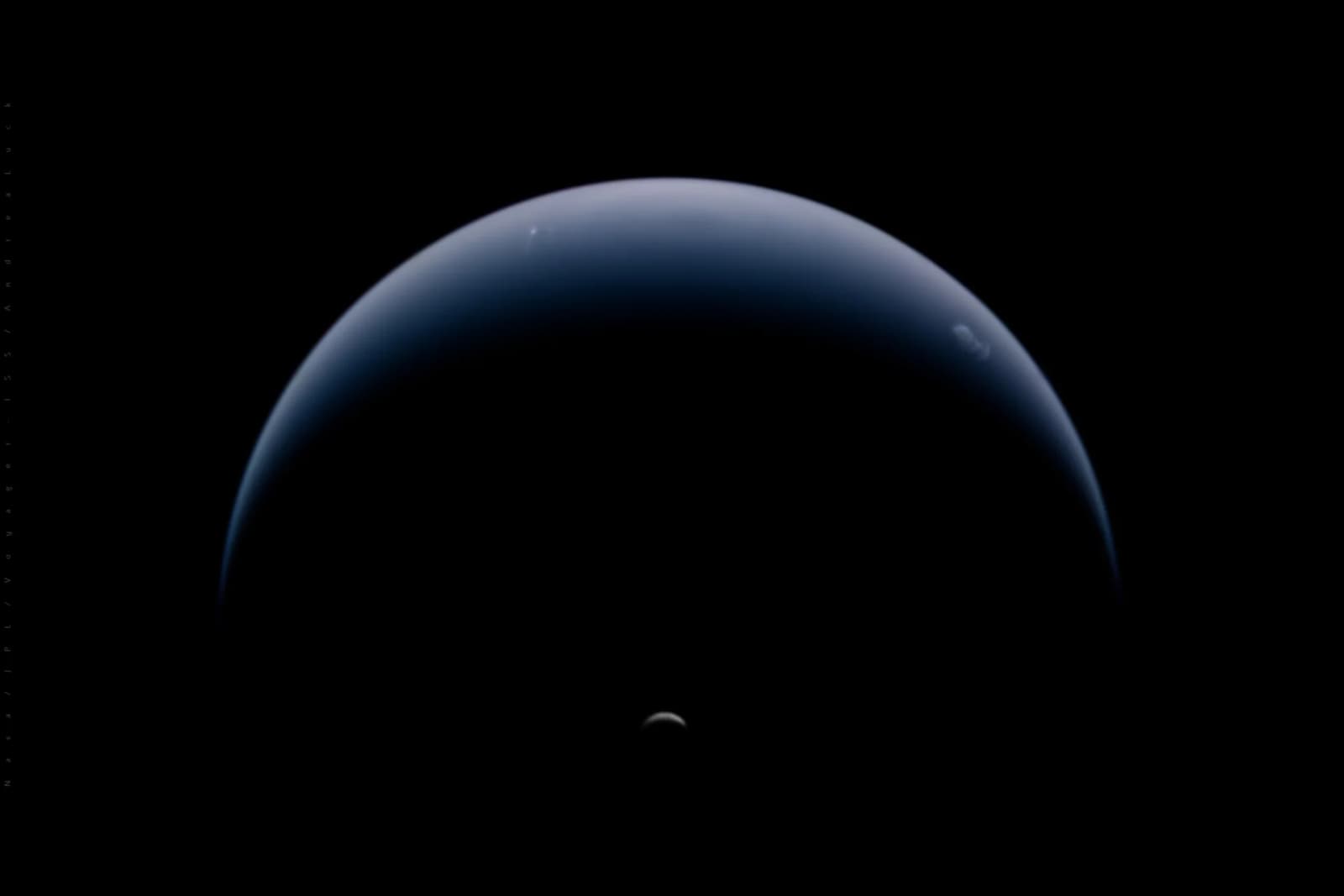
Computer simulations spanning 4.5 billion years of Solar System evolution suggest an undiscovered rocky or icy world—dubbed Planet X2—may orbit deep beyond Neptune and shape the strange paths of distant icy bodies. Published in the Monthly Notices of the Royal Astronomical Society in 2026, the study by Patryk Sofia Lykawka, Jonti Horner, and Pedro Bernardinelli points to a hidden planet of roughly one to two Earth masses circling at a semimajor axis of 350 to 500 astronomical units (AU).
Why Known Giant Planets Cannot Explain Distant Orbits
At Neptune's orbital distance of roughly 30.1 AU, sunlight is around 900 times fainter than at Earth, making distant Kuiper Belt objects difficult to detect. Yet astronomers have observed unusual populations beyond Neptune, including “detached” bodies such as Sedna and 2012 VP113 that stay well outside Neptune's gravitational pull, alongside objects moving on steeply tilted planes.
“It's a bit like the footprints in the snow,” planetary scientist Jonti Horner of the University of Southern Queensland told ScienceAlert. “It's telling you that somebody's been there that you didn't expect.” Testing an alternative model in which early Earth- or Mars-sized planetary embryos were scattered outward, the researchers found those embryos were mostly ejected within millions of years and failed to leave behind the observed orbital structure.
How Planet X2 Differs From Planet Nine and Next Telescopes
Introducing Planet X2 with a low-inclination orbit and a closest solar approach of around 200 AU simultaneously reproduced detached bodies beyond 150–200 AU, high-inclination populations, and extreme trans-Neptunian objects (ETNOs) like Sedna. While the distinct Planet Nine hypothesis—estimated in a 2025 analysis at roughly 4.4 Earth masses near 290 AU—targets a separate orbital clustering, Horner noted both worlds could potentially coexist.
Compared against Dark Energy Survey benchmarks, the Planet X2 models match inclination angles and perihelion spreads well, though semimajor axis values still diverge. Upcoming data from the Legacy Survey of Space and Time at Chile's Vera C. Rubin Observatory will sharply expand the catalogue of distant objects over the coming decade to test the prediction.