Indian rice export prices this week rose to their highest level in more than 19 months, a Reuters survey of Asian rice markets published on Thursday, 19 November 2026, showed. Traders said a stronger rupee and steady demand from African buyers were behind the rise. Thai prices also climbed, to their highest in nearly two years, while Vietnamese rates eased.
India's 5% broken parboiled variety was quoted at $394–398 a tonne, up from $385–390 a week earlier. The 5% broken white variety was quoted at $395–400 a tonne.
Why are Indian rice export prices rising?
Indian prices are rising because rice is costing more at home and overseas demand has held up. Niraj Kumar, head of the India rice business at Aditya Birla Global Trading, told Reuters that higher domestic paddy prices, sustained demand from Africa and a stronger rupee had supported Indian export prices over the past three to four weeks. He added that worries about below-normal monsoon rain and bad weather had also firmed the market.
A stronger rupee pushes up the dollar price Indian exporters need to quote to earn the same amount at home. That makes Indian rice dearer for foreign buyers.
How do prices compare across Asia?
Prices this week, per tonne, were:
- India, 5% broken parboiled: $394–398, up from $385–390, the highest in more than 19 months
- Thailand, 5% broken: $505–510, up from $495–500, the highest since December 2024
- Vietnam, 5% broken: $475–485, down from $490–495
Thai traders said regular buyers in the Philippines and Indonesia had made more purchases, and Japan had bought from time to time. One trader pointed to higher domestic prices. Another said fears that El Niño could cut output were keeping rates high. Thai supply is steady for now, and the next crop is expected early next year.
In Vietnam, a trader in Ho Chi Minh City said prices fell because buyers were not willing to pay the higher levels. Government customs data cited in the survey showed Vietnam exported 268,397 tonnes of rice in the first half of November. Its shipments for 2026 up to 15 November reached 7.18 million tonnes, worth $3.48 billion.
In Bangladesh, rice prices are still high even though domestic stocks are adequate, and traders said consumers were being hit hard by stubborn inflation.
What does the latest US government outlook say?
The rise fits the picture in the United States Department of Agriculture's Rice Outlook for November 2026, released by its Economic Research Service on 13 November. The report said India's 5% broken rice export quote stood at $390 a tonne on 10 November, the highest in over a year. It linked that to a weather-hit 2026-27 crop outlook, which ends 10 straight years of production increases in India.
The report also:
- cut its forecast for global rice exports in 2026-27 by 1.1 million tonnes to 60.3 million tonnes, still a record
- put most of that cut on India, whose forecast exports fell by 1.0 million tonnes because shipments to key markets have been slower than expected
- projected global rice production at 533.2 million tonnes, the lowest in three years
- lowered import forecasts for Bangladesh to 1.1 million tonnes and Senegal to 1.2 million tonnes, citing ample local supplies and higher world prices
- raised global ending stocks by 1.3 million tonnes to 199.8 million tonnes
Why it matters for India
Export prices decide how competitive Indian shippers are against Thailand and Vietnam. They also affect what importing countries pay for a staple food. West and Central African markets have been important buyers this year. Chennai Port recently reported record rice shipments to Africa. The Food and Agriculture Organization has also flagged tighter rice supplies worldwide.
Higher export prices can lift what Indian farmers and millers earn. But the USDA's lower export forecast shows that if prices go too high, buyers may slow their purchases or turn to other origins.
What to watch next
Traders will watch the rupee, the pace of African buying and how the El Niño-related weather risk develops in Asia. The USDA's next Rice Outlook is due on 14 December 2026.
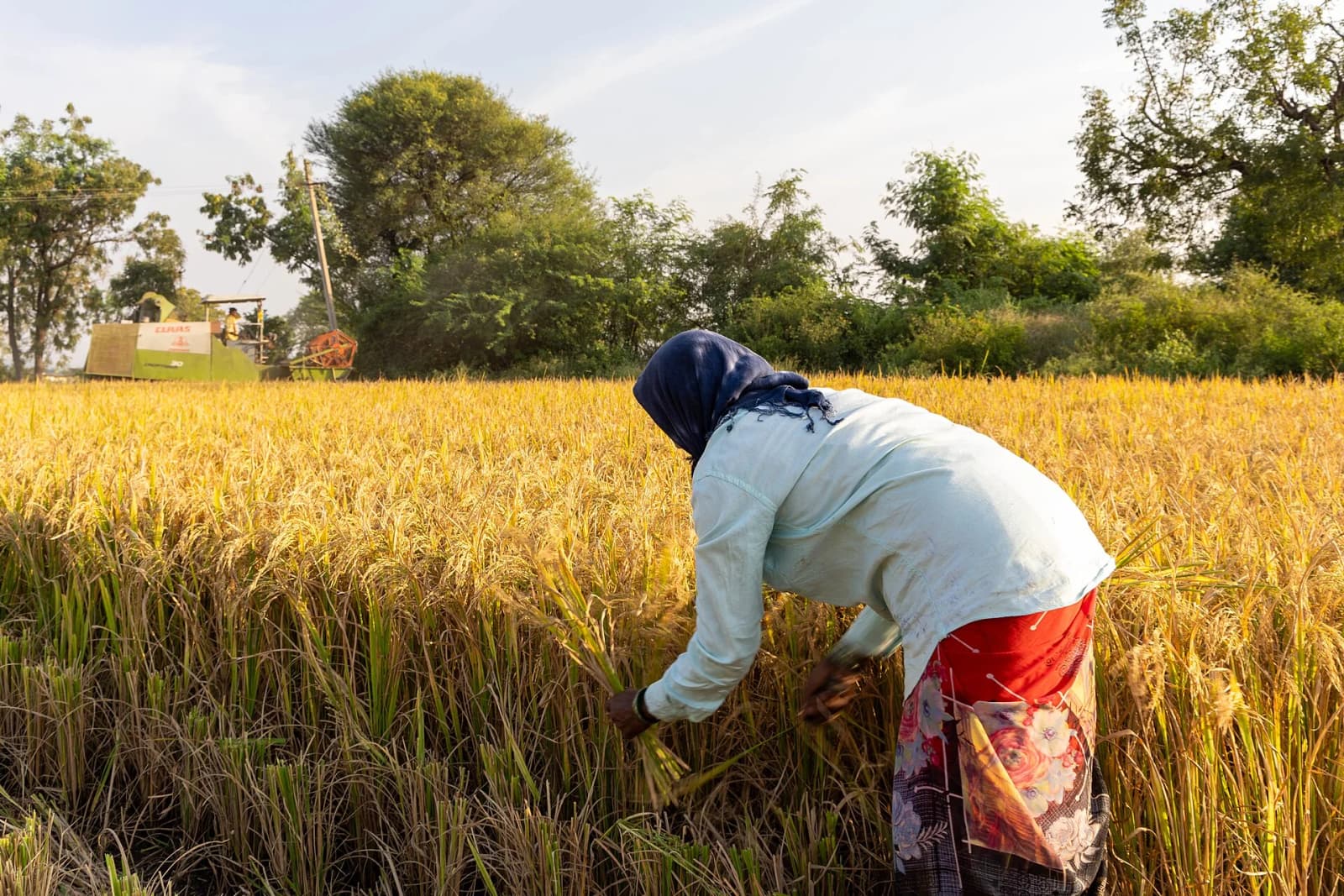
Photo source · Nanditha Gogate, WELL Labs, CC BY-SA 4.0