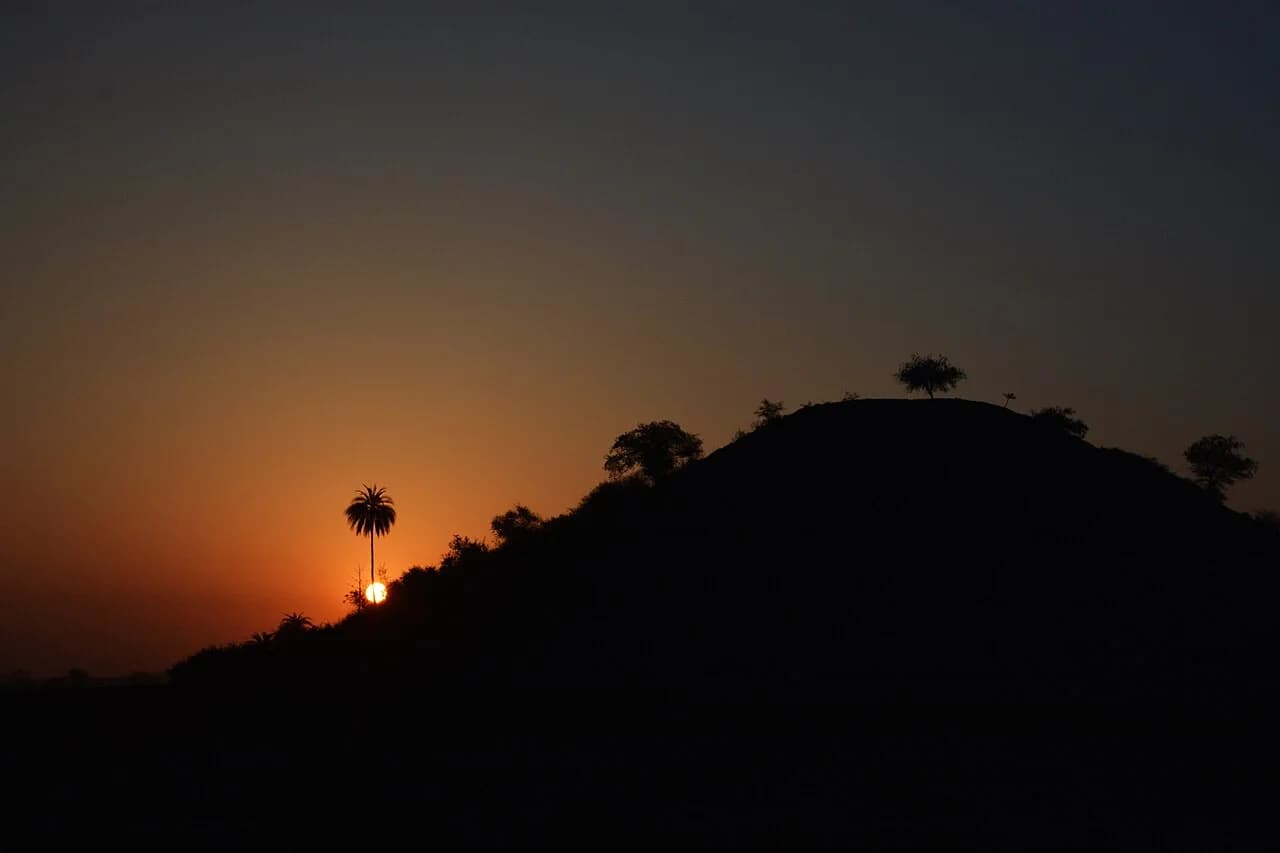
The Archaeological Survey of India (ASI) has cleared a fresh excavation at Vaishya Tekri in Ujjain, a mound that colonial-era records describe as possibly the largest Buddhist stupa of its time. The decision, reported on 13 November, reopens a dig that was abandoned in 1939 after labourers working inside the mound reportedly fell unconscious from a gas leak.
According to The Times of India, superintending archaeologist Shivakant Bajpai, who has studied Vaishya Tekri and the archaeology of ancient Ujjain for years, has been named director of the project. The work will be done together with the Madhya Pradesh state archaeology department, while the local administration is expected to handle logistics and arrangements on the ground.
A push from the state government
The clearance is a significant step for an archaeology initiative championed by Chief Minister Mohan Yadav, who has sought to bring the buried heritage of ancient Ujjain back into focus. Ujjain divisional commissioner Asheesh Singh had earlier said the administration was ready to offer all possible help, including support on land matters, the newspaper reported.
Before any digging begins, a joint team from the ASI, the state archaeology department and technical experts from the Maulana Azad National Institute of Technology (MANIT), Bhopal, recently carried out a ground-penetrating radar (GPR) survey at the site. GPR sends high-frequency radio waves into the soil to pick up changes below the surface without disturbing archaeological layers. The aim is to map buried structures and identify the most promising spots for trenches.
What the 1938-39 dig found
The Annual Administration Report of the Archaeological Department of the erstwhile Gwalior State for 1938-39 called the monument "perhaps the biggest known" stupa. It recorded a diameter of about 350 feet and a height of at least 100 feet. By the comparison cited in the reports, that is close to three times the width and nearly twice the height of the Great Stupa at Sanchi in Raisen district.
That earlier excavation used trenches radiating from the centre. It exposed parts of the main stupa and the remains of two smaller stupas, and it described a building method the report called "peculiar construction not met with anywhere else": a core of tightly rammed local murum (gravelly soil) faced with very large bricks, some longer than 22 inches, set in mud mortar.
A punch-marked coin and an Avanti coin found at the site support dating it to the Mauryan period, around the 3rd century BCE. The 1938-39 report suggested the monument could be one of the stupas attributed to Emperor Ashoka, but this was never conclusively shown.
Links to Ashoka still unproven
Bajpai's reading, as cited by The Times of India, is that the stupa was built when Ashoka served as governor of Ujjain, possibly inspired by his wife Devi, the daughter of a leading merchant of Vidisha. That merchant connection is believed to have given Vaishya Tekri its name. Some scholars have also linked the site to the Kanakgiri Vihara mentioned in Buddhist texts and to a large Buddhist monument described in Ujjain by the Chinese traveller Hiuen Tsang. None of these links has yet been confirmed by archaeological evidence.
What happens next
The 1939 trenches never went far enough to establish the stupa's full plan or elevation. Much of the outer brick facing has disappeared, and erosion appears to have removed parts of the upper structure.
Officials quoted in the reports said the main task now is to reconstruct the monument's original form and work out its chronology by examining the mound layer by layer, recording construction phases, structural remains and artefacts where they lie. If the dig goes ahead as planned, it would be the first systematic attempt in nearly nine decades to test the claims made about Vaishya Tekri, using scientific methods that were not available when the first excavation was halted.
PS · Sunil Ujjain, CC BY-SA 4.0