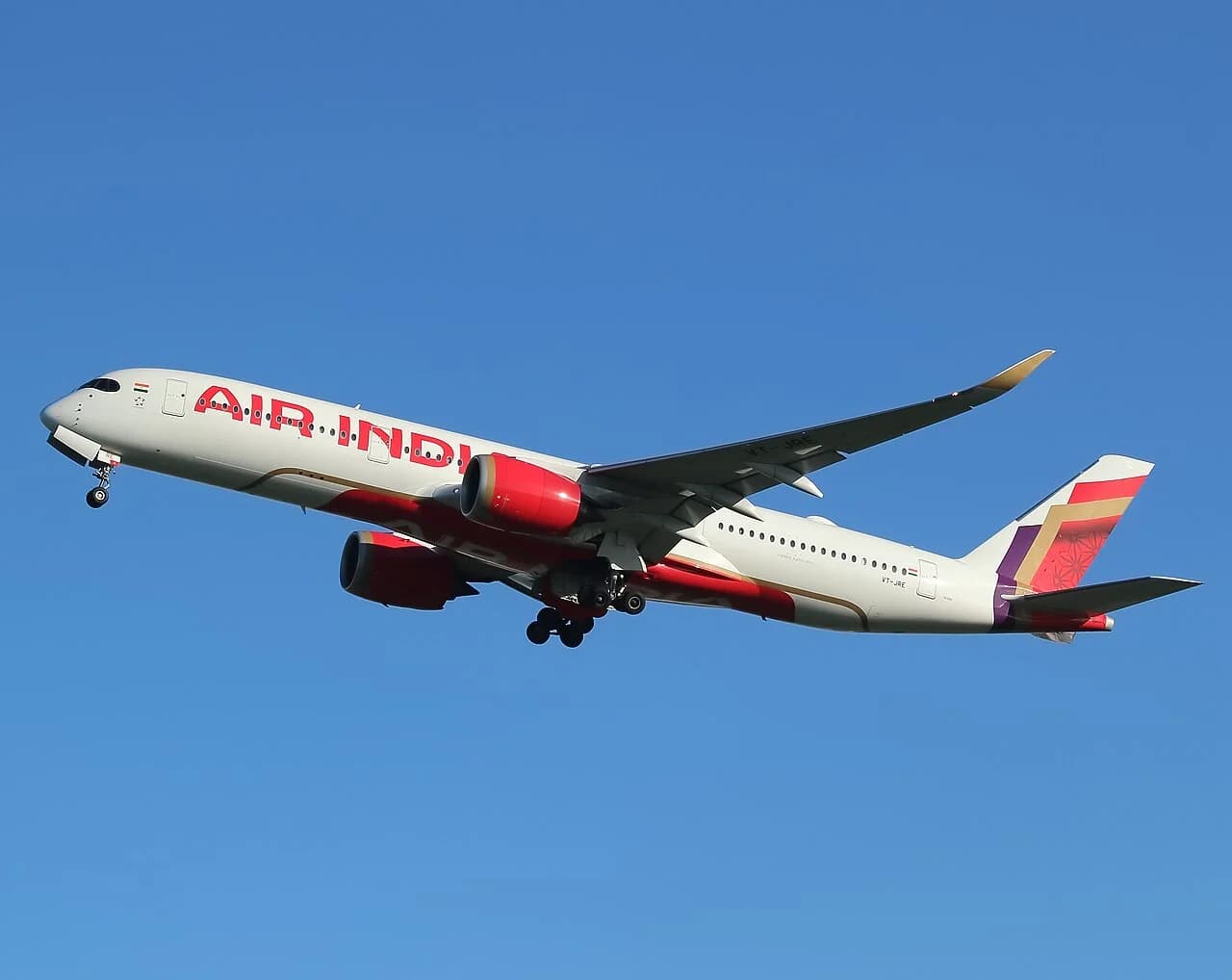
Air India said on Sunday, 15 November 2026, that its flights from Delhi and Mumbai to New York and Newark are flying non-stop again, now that airspace restrictions have eased. The change removes the refuelling halt in Rome that passengers had to sit through on these routes. The airline says it cuts each journey by about five hours.
"With airspace restrictions eased, Air India has now resumed non-stop operations on all four India-New York routes," the airline said, according to a PTI report carried by The Hindu.
What happened
Air India said that each flight between Delhi or Mumbai and the two New York-area airports now takes around 17 hours, according to The Hindu's report. Before the change, the same trip took about 22 hours because the aircraft had to stop in Rome for fuel.
The four routes link Delhi and Mumbai with John F. Kennedy International Airport (JFK) in New York and Newark Liberty International Airport (EWR) in New Jersey. Sunday's statement confirmed the change, but the switch itself had started earlier. Air India began flying these routes without a stopover in the first week of November and used Iraqi airspace to do it, sources told PTI on 6 November.
Aviation A2Z, an aviation news site, reported on 6 November that the airline had restored all four services and dropped the Rome stop. It quoted an Air India official: "We now have more flexibility in our route plans to Western nations due to the increasing options available in global airspace."
Background and timeline
The Hindu reported that this year, Pakistan's airspace closure and restrictions over parts of West Asia during the regional conflict badly disrupted flight paths between India and North America. Air India's flights from Delhi and Mumbai to JFK and Newark then began stopping in Rome to refuel. The newspaper said the longer paths over Jordan and Egypt also added flying hours.
The Iraqi side of the story begins on 18 September 2026. That day, Iraq said it was reopening to civilian flights the parts of its airspace that had been kept for military operations against ISIS, according to Asharq Al-Awsat. The newspaper said Iraq had started closing these zones in late 2016.
Ehab Karim, director of Iraq's General Company for Airports and Air Navigation Management, said the reserved airspace across western Iraq, from north to south, had been handed to his company for civilian use, Asharq Al-Awsat reported. The newspaper said the zones run from the far north of Nineveh province to the southern Anbar desert. They had mostly been used for sorties by the international coalition fighting ISIS and by the Iraqi Air Force.
On 11 October, Shafaq News reported a statement from Iraq's Transport Ministry. The ministry said civilian air traffic crossing Iraqi airspace had risen by about 31 per cent since the zones reopened.
In early November, Air India moved its New York and Newark flights onto routes through Iraq, according to the PTI and Aviation A2Z reports. On 15 November, the airline publicly confirmed that all four routes were operating non-stop.
Verified data
- Delhi: one daily flight to New York and four flights a week to Newark, all on Airbus A350-900 aircraft, according to The Hindu.
- Mumbai: a daily flight to New York and three flights a week to Newark, on Boeing 777-300ER aircraft, the newspaper reported.
- Journey time: about 17 hours now, compared with about 22 hours when the flights stopped in Rome, according to Air India's figures as reported by The Hindu.
Perspectives
The airline. Last month, a senior Air India official said the airspace restrictions had hit the airline hard, partly because of the West Asia crisis, and that the impact was worse than a year earlier, The Hindu reported. "The more airspaces are closed, the more southwards flights have to go... the more southwards flights have to go, the more the fuel bill," the official said.
The competition. An airline source told Aviation A2Z that non-stop flights between India and the US used to give Air India an edge over Gulf airlines such as Emirates, Qatar Airways and Etihad Airways. The source said the Iraqi airspace restrictions had eroded that edge by forcing an extra stop.
The costs. Aviation A2Z said a shorter journey does not automatically bring an equal cut in fuel costs. A non-stop flight has to carry fuel for the whole trip, and that extra weight can reduce how many passengers, bags and cargo it can take. The site added that dropping the Rome stop also saves landing fees, airport charges and ground-handling costs.
Iraq. Karim said civilian use of the zones would make it easier to set up new air routes and would bring in more revenue, Asharq Al-Awsat reported. Economic expert Ziad al-Hashimi told the newspaper the decision could shorten flights and cut operating costs for airlines crossing Iraq, particularly those flying in from Europe and Asia.
What it means for Indian travellers
Passengers flying between Delhi or Mumbai and New York or Newark now save about five hours each way, going by Air India's own numbers. Aviation A2Z reported that passengers had to stay on board during the Rome stop and could not get off. That wait is now gone.
For passengers who would rather not change planes, Air India's direct flights are an alternative to the Gulf carriers, which offer many India-US connections through their hubs, the site noted. The airline also has a business reason to want the shorter route: its official said last month that longer southern paths mean higher fuel bills.
Established and uncertain
Established:
- Air India itself says all four India-New York routes are non-stop again, and both PTI and Aviation A2Z, in separate reports, said the Rome stop had been dropped.
- Iraq's airport and air navigation company, its Transport Ministry and the office of its armed forces commander-in-chief all announced that the western military zones had reopened to civilian aviation on 18 September.
- The Hindu gave the frequencies and aircraft types listed above in its report on the airline's announcement.
Uncertain:
- Exactly how much time is saved. Air India's figures, reported by The Hindu, put the journey at about 17 hours, down from 22. Aviation A2Z said it had dropped from about 21 hours to 18, based on the reported schedule.
- Which way the flights went during the stopover period. The Hindu described longer paths over Jordan and Egypt. Aviation A2Z said Delhi flights had crossed Oman, Yemen and southern Saudi Arabia before stopping in Rome.
- How much fuel the airline saves. Air India has not put out a figure, and Aviation A2Z said the overall gain depends on fuel burn, payload and operating conditions.
- How long non-stop flying will last. Aviation A2Z said it depends on continued access to suitable airspace and on geopolitical conditions.
Next steps
Karim said reopening the zones would allow Iraq's Aeronautical Information Publication to be updated and shared with international airlines, Asharq Al-Awsat reported. Iraq's Transport Ministry said further technical and regulatory work was needed to remove the zones from that publication.
Al-Hashimi told the newspaper that European restrictions still limit how much Iraqi airspace can be used. He said Iraq would have to persuade the European Union Aviation Safety Agency to let European airlines fly over Iraq again.